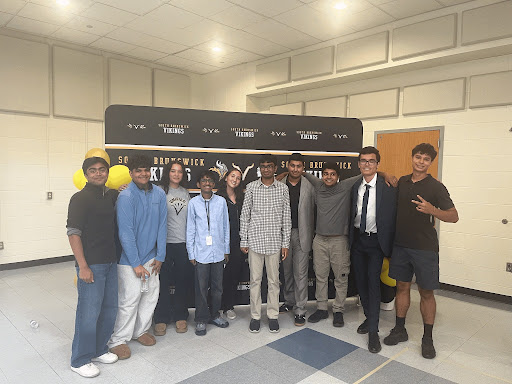


















Freshmen walked into the high school in the beginning of the year feeling overwhelmed and stressed knowing it’s nothing like middle school. Classes become harder, workload becomes overwhelming, and the realization that you’re planning your future messes with your head.
This is how freshmen felt in the beginning of the year:
- “I was extremely nervous. There was a lot of pressure because everyone always told me that high school is what matters and it determines my future so I have to make sure I’m doing my best.” – Audri Holder (’29).
- “I was so scared and I felt like I might not get into college.” – Ritvika Gupta (’29).
Compared to how they feel now that they’re at the end of the year:
- “I definitely feel a little bit more relaxed, but at the same time defeated because the step to high school from middle school was very hard.” – Audri Holder (‘29).
- “I feel like I know the high school more now, and now understand what I want to do in the future.” – Isabella Vargas (’29).
A lot of people felt scared because they knew that high school sets up their future. At the age of fourteen and fifteen, this is a scary realization. Small mistakes seem loud while achievements appear to feel like expectations rather than something to be proud of. Although those fears might be dramatized like “I felt like I might not get into college,” the exaggeration clearly expresses that fear, showing that the freshmen realize that high school is their first step into their future.
At the end of the year, the stress tends to relax considering by now people are used to the workload, but the pressure is still visible. College is such a huge fear among teenagers because that’s when your life really starts in the real world. Everything matters and this is a lot of pressure for a bunch of teenagers who are still fourteen or fifteen.
These are some challenges they faced this year:
- “A challenge I faced was managing my time. In middle school, there was less work to be done. But now, I spend around three hours doing work outside of school.” – Isabella Vargas.
- “One problem was definitely the work load. In high school, they don’t mess around. I’ve had more work from one class than all the weekly work from middle school.” – Zain Mehaboob (’29).
- “This year I knew I had to take school more seriously which meant the consequences of staying up late doing homework.” – Raina Simlote (’29).
One major challenge that freshmen faced this year is workload. Middle school homework is so light, usually just a worksheet or even no homework, while high school homework has English annotations, math worksheets, and a lot of research assignments. Middle school does not fully prepare students for the rigors of high school, which is why the high school workload felt heavier and had more pressure.
Another challenge freshmen faced this year was procrastination. Since middle school is so light, students naturally learned that they can do their work last minute and turn it in. However, high school quickly taught them that working at the last minute doesn’t work anymore through the consequences of staying up late. Procrastination is the main thing that trips students up, which is why the workload feels so stressful. By the end of the year, a lot of students definitely got used to the workload so they’ve learned to adapt.
This is what they would tell their eighth grade selves that are stressing about high school:
- “Try to stay calm and be hopeful about high school because it’s an experience you don’t wanna forget.” – Zain Mehaboob.
- “I would tell them to enjoy it because it goes by very fast, but also think about making time to prioritize the things that are good for you” – Raina Simlote.
In eighth grade, after hearing the intensity about high school, teens tend to stress, and after their first few days of high school, there’s still that feeling of “this is not my place” that takes over. However, towards the end of high school, that earlier nervous feeling gets replaced with “this is my place” because friendships form, workload becomes the least of their worries, and familiarity kicks in. Although the nervousness is understandable, students eventually realize that high school isn’t as bad as they initially thought.
Since sophomore year is harder than freshman year, here is some new advice from upperclassmen and some advice from my Advice for Freshmen article:
- “Don’t compare yourself to anyone else, because if you compare yourself to anyone else, usually they’re not on the same path as you, or they’re not the same as you, so it’s better if you compare yourself to yourself, ‘cause then you can strive to be a more better version of yourself than being the same as everyone else and comparing yourself to everyone else.” – Aarya Nandakumar (’28).
- “You also have to acknowledge that sometimes your work will, inevitably, go unnoticed but it still does not take away from its importance, hence why you should chase self fulfillment and the happiness of others rather than the approval of perhaps your superiors.” – Marjan Malihi (’26).
- “Your choices in freshman year are not permanent if you don’t want them to be. If there are things you regret, you have three years to change them and do what you want to. If there are things you love, you have three years to revel in them and enjoy their presence in your life. Either way, you have the power to choose what your high school life will be like.” – Alex Vega (’26).
- “If I were to give true advice, it would simply be to not overload yourself, thinking you can do it because sometimes being well-rounded isn’t the most important thing, but being well-balanced.” – Akash Mehta (’28)
Sophomore year tends to be the year where freshman fear, aside from junior year, because that is when high school really begins to matter. Sure high school matters from the start, but by sophomore year, colleges expect students to adjust to the school environment and are less forgiving with grades. This realization heightens the fear because it makes small mistakes feel exposed. You’re trapped with this idea that if you mess up, your future is in jeopardy. However, that is not the case.
Sophomore year is also the year where most students take their first AP class, so the rigor feels intense in a way you’re not used to, which adds to the stress of grades. AP classes expect you to be more independent and learn the material by yourself, which is something students are not used to. And along with AP tests and trying to build your college career, high school will feel like a mess and you’ll feel like your effort is unseen and not worth it. That’s what Marjan implies through her suggestion.
Oftentimes, you’ll find yourself staying up until midnight studying for a test and possibly end up with a grade that you didn’t want. It’s happened to all of us. And it’ll happen enough times and you’re just sitting there thinking, “Are my efforts even worth it?” Naishu Vempali, another senior, said something similar, saying that “colleges don’t see or care how much you suffer to prove your worth to them.” And she’s right. They just care about results. That feeling sucks and it’ll slowly turn into, “Why am I even trying?” Don’t do that. Do what Marjan said: chase self-fulfillment rather than self-approval. The most draining thing a student can do is push themselves to study and stay up late, thinking more effort leads to better results, and then realizing that all that night’s work did nothing. It’s not worth putting yourself through all that just to gain approval from yourself. Obviously don’t stop trying and don’t just give up, but try to find little fulfilling moments that lifts your weight off your shoulders and look to do things that make you feel proud of yourself, rather than disappointed.
Another thing that tends to fuel stress is fixation and comparison. It’s really easy for people to look around and think that others are doing so much better than them while you’re just…there. The truth is, a lot of people are struggling. A lot of people are stressed and they hide it behind calm faces and bright smiles. Also, not everyone is on the same path as you. Everyone has different interests and grows exposure and progress in different paces. No one is the same as you, so it’s better to focus on yourself so you can strive to be a version of yourself that you’re proud of.
Also, fixation. Because of societal standards and growing expectations, a lot of students tend to think that once they choose something, they have to stick to that path. Truth is, everyone is growing to become a fuller version of themself and no one has their whole life figured out in high school. A lot of teenagers take classes that seem interesting and then end up realizing that they don’t like it. So don’t worry about commitment for something you don’t like. You have three years to find something you like and commit. There is nothing wrong with not having your whole life figured out now. Because you’re not the only one.
However, the piece of advice I think is the most important for rising sophomores to hear is the one about overloading yourself with rigorous classes. Due to weighted GPA’s and colleges expecting rigor, students can easily fall into the trap of thinking that an overloaded schedule full of AP or Honors classes will look impressive on college applications. What Akash is saying here is that many students attempt to challenge themselves with more rigorous coursework just to look impressive on applications. He says that although it’s beneficial, there’s a large difference between adding one extra honors/AP course to challenge yourself rather than doing a huge jump and adding five extra honors/AP courses just to look good for college. Because of this mindset, students tend to force themselves into thinking that they can handle all this rigor, and then end up a few months later regretting it. Truthfully, weighted classes look impressive, but adding random classes to your schedule that don’t match your interest and you’re only in for the weighted GPA is not as eye-catching as focusing on adding rigor to classes that accommodate your strengths.
The most important part from Akash’s advice might be that “being well-rounded isn’t the most important thing, but being well-balanced.” This applies to course selection too, rather than just extracurriculars. For those who don’t know, being well-rounded means to have a broad range of skills and knowledge while being well-balanced means to manage different parts of your life in a healthy way. Colleges don’t care that you pushed yourself through five AP classes. They care about initiative and passion. And if you’ve heard of “sophomore slump” it is very real for many students and it comes from making the poor decision of stacking your schedule with unnecessary classes purely because of the weighting. Therefore, don’t worry about stacking your schedule with weighted courses just for it to look impressive. It’s much better to add one or two additional classes to challenge yourself and show perseverance through that.
Sophomore year might sound scary because of the increasing pressure of grades and workload. But hey, you made it past freshman year which sets you up well for the rest of high school. There will be moments where your efforts seem to not matter when they really do. Many upperclassmen were in the same place you are right now and they still made it, despite a few allnighters and internal crash outs. These reflections from current freshmen really show how everyone has grown this year, despite the earlier fear of the pressure. It was hard, but you all pushed through, setting yourselves up well for the next three years. You should be proud of yourselves. Seriously.