

















There was a recently published opinion editorial by our Viking Vibe’s beloved “political guy” Om Bhaskar—who also happens to be one of my good friends. Om writes with a more fiery ardor than I could ever imagine (see the very first sentence of his piece on China)—and I admire how deeply he absorbs himself in disparate, political topics. Om has proved a brilliant talking partner on political issues and I think his work provides much needed context most of the time.
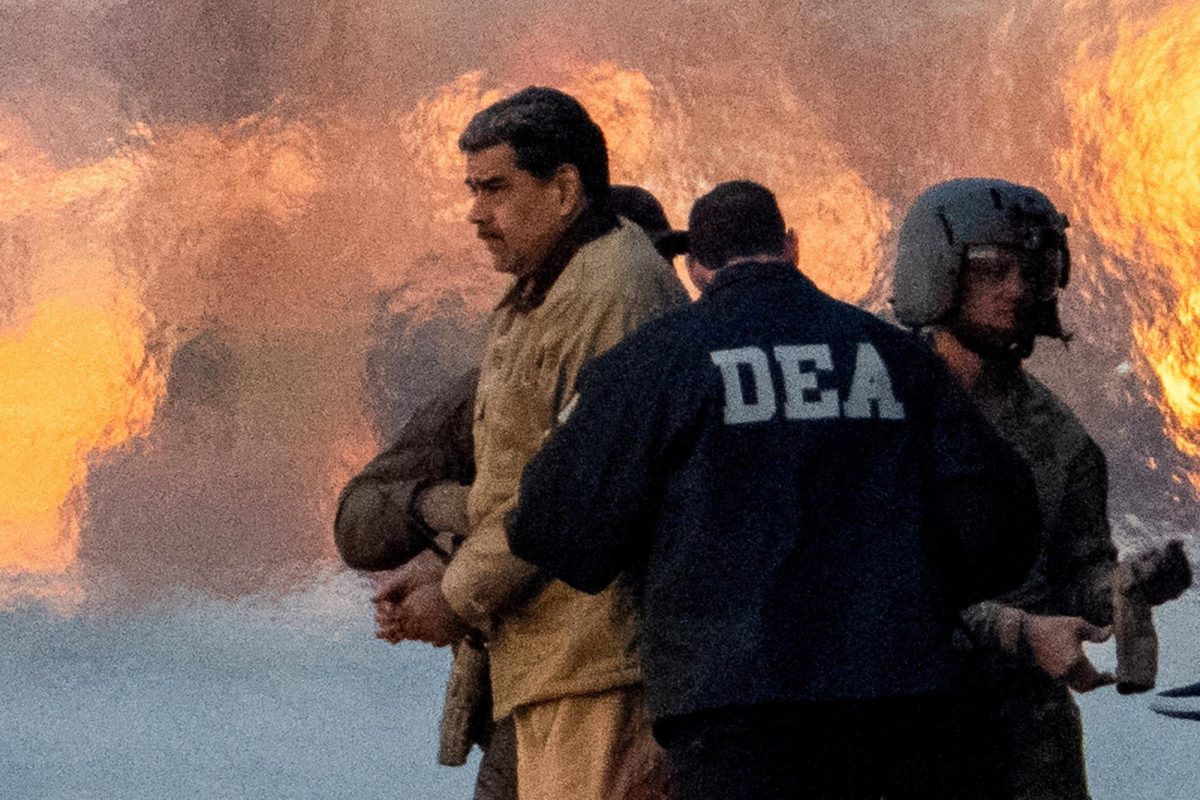
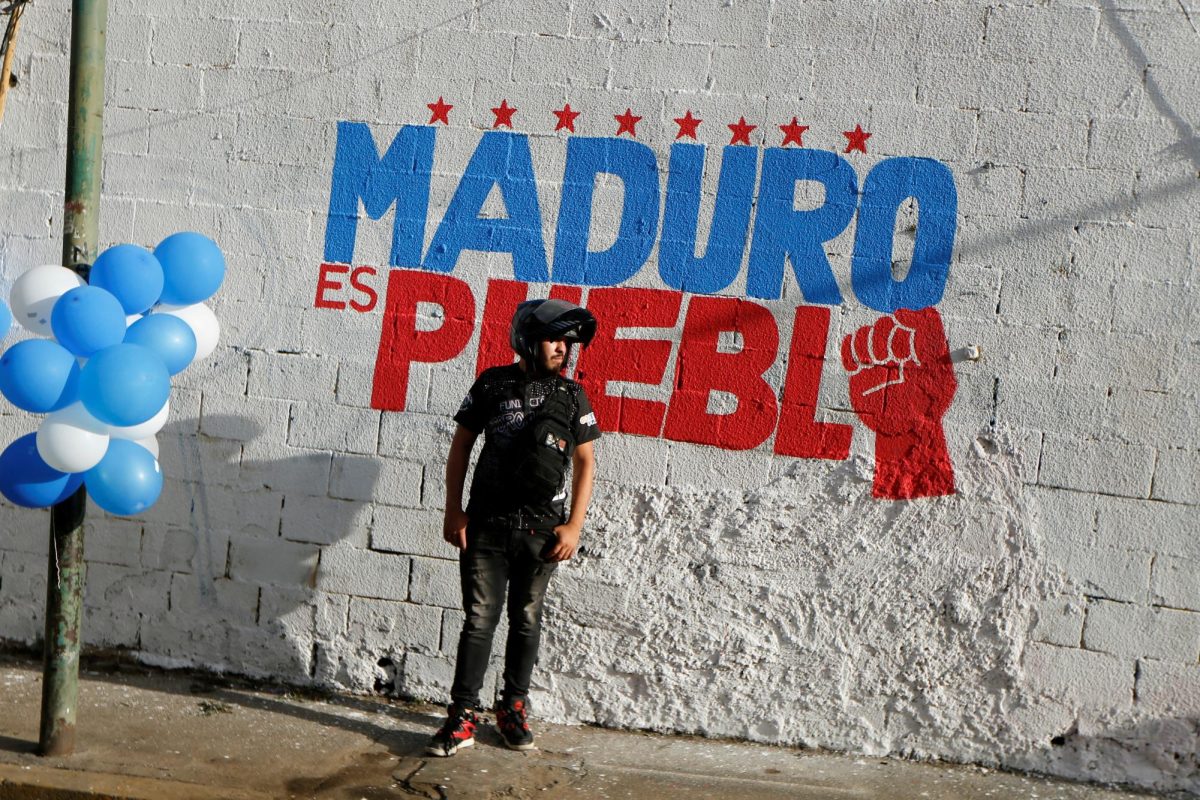
As much as I respect him—I fundamentally disagree with the trite way in which Om has portrayed complex ideals, such as “international law,” in his most recent piece regarding the deposition of Maduro. His expected passionate language oversimplifies what is obviously a very contentious topic and is too dismissive towards the nuance that both the topic and our readers deserve, and so I feel compelled to respond.
…
Om gives his initial bias almost immediately, describing how it is feasible to argue that the intervention “potentially [brought] millions relief from the crushing jackboot of authoritarianism,” and that one could easily point to “jubilant crowds of Venezuelans, cheering.” While it’s important to note that Om does not explicitly argue the point that the Venezuelan community prefers a new administration (this early on in the piece, anyway), and only establishes that it could be made, this still comes across carelessly or dishonestly. What about the clips later revealed have to come from outside Venezuela? Why is the Venezuelan population being taken as a monolith? It’s taken as a fact that Venezuelans want a new government, but Om does not provide any backing for a claim which—if proved—could genuinely be good evidence for his later perspective and his general apathy towards the idea of international law. The passion in that sentence (jubilant, jackboot of authoritarianism) is so strongly juxtaposed with his more tame previous sentences about “good evidence and reasoning from both sides” that it is taken for fact, and incorrectly uses emotional imagery to justify a disregard for the nuances of how people wish to be liberated, and the connection of that fact to international law.
Om then leaps right to his main point. After conceding that the move may be internationally illegal, he claims that the reader ought not “act like China, Russia, or Iran care for international law or the dignity of human life,” describing Russia’s “butchering” of civilians (see what I mean by emotional wording?) in Ukraine and China’s ethnic cleansing against the Muslim Uyghurs. It’s undeniable that these political actions are happening, but Om—in his fiery words—does not realize he has reached a non-sequitor. The fact that America’s enemies are breaking international law does not in any way give America permission to also break it.
Om has completely ignored the benefit that America, being “the leader of the rules-based free world” has had in the past century, and especially since the fall of the USSR in 1991. Om sees those modern authoritarian countries in the same way he sees the United States, and thinks that through a faulty justification of how international law is unenforceable, he may ignore that it was indeed America who had in the past actually enforced international law—to such a point that post 1991 was called by some the “end of history” for how ubiquitous liberal democracy had become. You could call it a form of legalist American exceptionalism on my part, but the rushed invasion may genuinely be the worst possible response to global political turmoil. America—long the leader of the (historically freedom-focused) Western world—would benefit from the world following the rules the United States has itself written, because political turmoil is bad for the markets. And America has always loved a good, stable, free, liberal market. Om calls international law a “dying concept,” but it is only dying for America’s recent abdication to populism, a tradition which kills America’s long bias towards order and stability (what other nation has had one government system since the eighteenth century?). The death of international law was and is in no way guaranteed. America has not always lived up to its self-set standard—not in Iraq, not in Vietnam, etc.—but has always benefited immensely when it has tried to. Why repeat past mistakes?
Now let’s return to Om’s declaration about the “greater good,” about freeing civilians from the “shackles” of authoritarianism. A chief sin, I’d say, about authoritarianism is its arbitrariness. Who gets access to political power? Who gets access to the economic engines of a nation? Not the civilians. Democracy as a government is great because it’s stable (which is why it often complements capitalism), but if the United States is going around overthrowing regimes based on viral videos, the United States itself may be seen as authoritarian too. That makes sense, doesn’t it? Because through justifying the breaking of international law like authoritarian countries who the United States apparently has no effort being “nice to,” the United States becomes no better than them. Om’s critical flaw in logic is that he does not understand that keeping international law is in no way meant to be honest to America’s enemies, it’s to be honest to America’s partners in the developing world. International reputation—which until recently America possessed—is a resource rarer than oil, or natural gas, or any rare earth mineral, and America’s disdain for the world it created itself is probably the most dangerous and idiotic trait it can have.
America’s loss of power was never inevitable. None of this was ever inevitable (again: 250 years of remarkable consistency). It’s come from brash decisions like the avoidable invasion of Venezuela.