










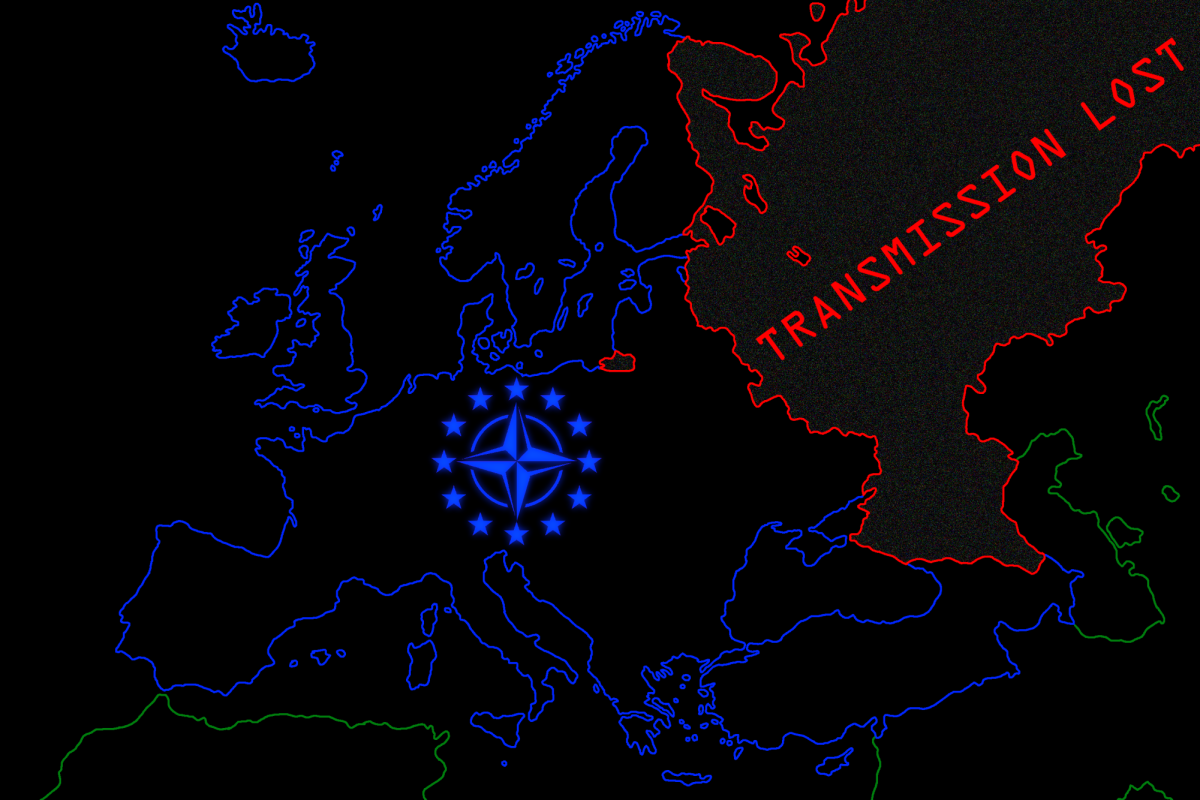
The Russian Federation used to be a country that was respected and feared on the world stage. There was a point when many people believed Russia was strong enough to go toe-to-toe with NATO, the most powerful military alliance on the planet. Many also believed Russia would continue to be a great military power far into the future, and that it would remain as an independent force on the world stage, one not at the mercy of foreign powers. Then, Russia invaded Ukraine.
Russia’s story is one of the most tragic in my opinion. Born from the corpse of the Soviet Union, Russia emerged as the most powerful post-Soviet state, and its de-facto successor. Russia’s transition to a capitalist market economy from a socialist command economy was not an easy one, and well-connected insiders bought previously state-owned enterprises at relatively low prices, creating an oligarch class in Russia which added to the large amounts of poverty and economic instability in the fledgling nation.
Crime was rampant, with the homicide rate surging in major Russian cities. The first president of Russia, Boris Yeltsin, was ineffective at solving these issues, and Russia even lost the First Chechen War against separatist forces in Chechnya under his watch. Yeltsin was also a raging alcoholic, and Russia’s prestige had been badly damaged after the collapse of the USSR. Life had seemingly only gotten worse since the switch to capitalism. Russians were looking for someone who would take charge and fix up the country, and that person came in the form of ex-KGB agent Vladimir Putin.
Vladimir Putin promised many things, including the restoration of Russian prestige and the destruction of Russia’s organized crime problem. After winning the election, Putin instituted many reforms which improved the lives of average Russians, making him very appealing to the public. Under Putin, the horrific large-scale gang wars in Russian cities ceased, Chechnya was reconquered during the Second Chechen War, and the Human Development Index (HDI) of almost every Russian oblast (a subdivision similar to a US state) began to steadily increase. Russia’s military was also modernized, making it the world’s second most powerful fighting force by the 2010s.
It’s unsurprising that Putin was so popular at this point. Russia had been “rebuilt” in many ways, and while most of Russia’s most prominent systemic issues (such as the power of the oligarchs) were not addressed, a facade of stability and prowess was emanating from the Russian state. At this point, Russia also began militarily intervening in its neighbors, invading Georgia in 2008 for example. Putin’s “strongman” rule and hostile military interventions in its neighbors would begin Russia’s slow drift away from its European kin in the West.
Putin’s Russia wasn’t an anti-west state by default. In fact, Putin and many other high-ranking Russian officials floated the idea of joining NATO in the late 90s and early 2000s. The main reason things fell through is because of what I’d like to call the “Russian Ego.” Russia’s government (and a large sect of its population) believes that they deserve special treatment and to be considered a superpower on the world stage, and this ego got in the way of Russia’s NATO aspirations. Russian officials were told that the country had to apply to join NATO like any other country, and would not be invited. Russia refused, believing it was entitled to special treatment. After all, the “great Russian nation” could not be compared to pathetically small and weak countries like Estonia. In the end, Russian officials chose not to join NATO and integrate further with the West. This would end up being one of the greatest mistakes ever made by a Russian leader in world history.
In 2013, Ukraine experienced the “Euromaidan,” also known as the “Maidan Uprising.” This started as a series of demonstrations in the Independence Square of Ukraine after the deeply unpopular president Viktor Yanukovych suddenly decided not to sign the European Union–Ukraine Association Agreement, an agreement that would’ve integrated Ukraine further with Europe, and could’ve potentially been the precursor to a Ukrainian accession to both the European Union and even NATO. Russia had placed significant pressure on Ukraine not to sign the deal, and Yanukovych was a pro-Russian president who decided to throw out the deal despite the fact that the Ukrainian parliament overwhelmingly supported it. Euromaidan continued into 2014, with deadly clashes eventually ending with Yanukovych fleeing the country and Ukraine forming an interim government. The thought of Ukraine integrating further with the West was, evidently, too much for the Russians to bear, and this is where things went seriously wrong.
After the Ukrainian people overthrew Yanukovych, Russia decided to invade and annex the Ukrainian oblast of Crimea (something they had promised not to do before.) The Russian government also began supporting Pro-Russia separatists in the Donbass region of Ukraine, an area with a high concentration of Russian speakers. This is seemingly the event that caused the permanent rift between the West and Russia, as Western democracies levied large amounts of sanctions against Russia. Keep in mind, just four years before in 2010, American, Polish, Ukrainian, and British troops marched alongside Russian ones during Russia’s once-renowned “Victory Day” parade in Moscow, commemorating the end of World War Two in Europe. The once seemingly amicable relationship Russia had with the West was thrown out by Putin and his lackeys, and Russia began to align itself more with the Eastern autocracies of China and North Korea. This marked the end of the idea of a prosperous, peaceful, and Western-integrated Russia.
Russia would go on to become a hypermilitaristic, autocratic state with Putin at its helm. Its electoral system was degraded, elections as a whole became a sham, military spending expanded, and Russia continued to antagonize the West by using “hybrid warfare.” This has taken many forms. In 2014, Russia was behind the destruction of an ammunition depot in Czechia. It was found that Russia was also behind poisonings in the UK, dubbed the Salisbury poisonings. Most infamously, in 2016, Russia was found to be behind cyberattacks and disinformation campaigns to destabilize the United States and make people lose faith in the democratic process.
February 24, 2022, marked the beginning of the end for Russia. It was on this day that Russia launched its infamous full-scale invasion of Ukraine. Russia had been preparing for months, with a built-up army that, while outdated, was vastly superior to the Ukrainian force in just about every way at the time. Regardless, the affair that should’ve taken weeks ended up becoming a humiliating slog for the Russians, as the Ukrainians valiantly opposed Russia’s imperialism. With weapons from America and Europe, Ukraine sent the Russians running from their north in months, and by the end of the year, any Russian gains west of the Dnipro River were pushed out. By the end of Ukraine’s counteroffensives, Russia only managed to cling to some partially occupied southern regions. The Ukrainian people became fervently anti-Russia and began seeking complete integration with the West, and Russia was financially ostracized by most Western democracies, turning it into the most sanctioned country on the planet. Russia’s economy largely survived because of all the exports of oil and gas it was able to give to China and India at discounted prices, and from government spending on the military keeping industry afloat. In the first few years of the war, Russia’s economy didn’t actually suffer all that much because of this, but the model is unsustainable, and will collapse with due time.
We now come to the modern day. Russia has become a hypermilitaristic pariah state stuck in a quagmire in Ukraine. As of writing this article, Russia has taken upwards of 1.3 million casualties in the war while barely moving forward from their positions by the end of 2022. In fact, in 2025, Ukraine launched an incursion of their own into Russian territory, briefly liberating the Russian town of Suzdha before being pushed out months later. Russia also constantly threatens the West with nuclear annihilation, while also intensifying its acts of sabotage and disinformation across NATO countries. This is no longer a country worth respecting. Rather, it has become a country on par with rogue states like North Korea. The only thing that makes Russia dangerous, at this point, is its nuclear weapons, size, and ridiculously belligerent leadership (things most countries should ideally not have together!) Its economy has become extremely reliant on China, turning into something almost akin to a Chinese economic satellite state. Siberia’s resources are exploited by Chinese corporations and industry, and Russia can realistically never leave their side.
Russia’s population is also declining rapidly, not helped by the war they’re fighting which is sending hundreds of thousands of Russians to their deaths every year. This is mainly fueled by Putin’s own self-serving interests, but also by many delusional common Russians who still sincerely believe their country is still a superpower. Russia, unlike the rest of Europe, has been unwilling to accept that their country is not, and will not be a superpower. Where France and the UK have largely let go of their once grand empires, instead opting to largely integrate with the rest of Europe and the West to build real prosperity, Russia continues to lie to itself. Its citizens live worse lives than most of Europe. Its suicide rate is one of the highest in the world, and much higher than its European counterparts. It is currently committing a horrific genocide against Ukrainians in its occupied territories, and wishes for the total destruction of Ukraine’s language and culture. Almost every one of its European neighbors want it dissolved and humiliated for the crimes it has committed in the past.
It is a morally backwards country, with men being allowed to beat their wives (as long as it only happens once a year, how kind!) and homosexuals being ostracized in Russian society, with the country being ranked as the most dangerous for LGBTQ+ people in all of Europe. It has become a backwater whose internal stability seemingly hinges on Putin’s life. Once Putin dies, there’s no obvious successor, and if Russia’s central government were to fall into disarray, separatist groups would certainly feel it to be the perfect time to strike, especially because of how badly minority groups are treated in Russia. Russia’s leaders will probably not change their ways unless a sort of miracle takes place. The country continues to sabre-rattle at the West, with NATO analysts projecting that by 2029, Russia will be “ready” for an invasion of the Baltic states.
You’d think the Russians were fulfilled with their humiliation in Ukraine, but apparently, that wasn’t enough. Mother Russia wishes to send more of her sons to die in a useless war they are doomed to lose. Eastern Europe, especially Poland, has been preparing for this potential war for years, and they are ready. In all of NATO, Poland spends the most on its military as a percentage of its GDP, and the Baltic states are not far behind either. Russian boots will never march on Warsaw, Riga, Vilnius, or Tallinn ever again, and any attempt made by the Russians to create this reality will be met with the complete obliteration of their armed forces. Whether or not Putin and his lackeys truly know this is questionable, especially given the fact that they’re even building up for a war in the first place.
At this point, there is a seemingly obvious path Russia will take after Putin’s death. Putin’s successor may sing the same tune that he currently does. Russia will continue to be a backwards, degenerate nation unable to let go of its imperial ambitions. Slowly, it will continue to have its resources exploited by Chinese industry, and in the worst-case scenario, the country could see severe crackdowns on dissent and large-scale separatist movements. This Russia does not survive in any meaningful way in the long run, and could very well fragment just like the USSR did. A messy dissolution of the Russian Federation would be especially dangerous because of Russia’s large nuclear stockpile, which could be used for malicious purposes if nefarious groups get their hands on them. Alas, this is the fate Russia’s leaders have chosen. There is, probably, no turning back.
There’s a chilling line from a Chechen war song that I’d like to quote. The song’s name is aptly called “The Death of Russia.” It is a piece forged from the anger and bitterness felt by the Chechens, who experienced horrific war crimes at the hands of the Russians. It speaks about the humiliation the “great” Russia experienced on the battlefield when fighting Chechen militants, and its English translation roughly says: “Forget about being a world power, which you were once recognized as, now you don’t even have the right, to say you were right.”
The creator of this song, Musa Nagaev, predicted the future here. Russia is no longer a world power. They can no longer claim moral superiority over the West. As time goes on, the Russian bear will grow weaker, more fragile, and eventually, it will meet its end. In a few decades, we too may see the death of Russia.


