



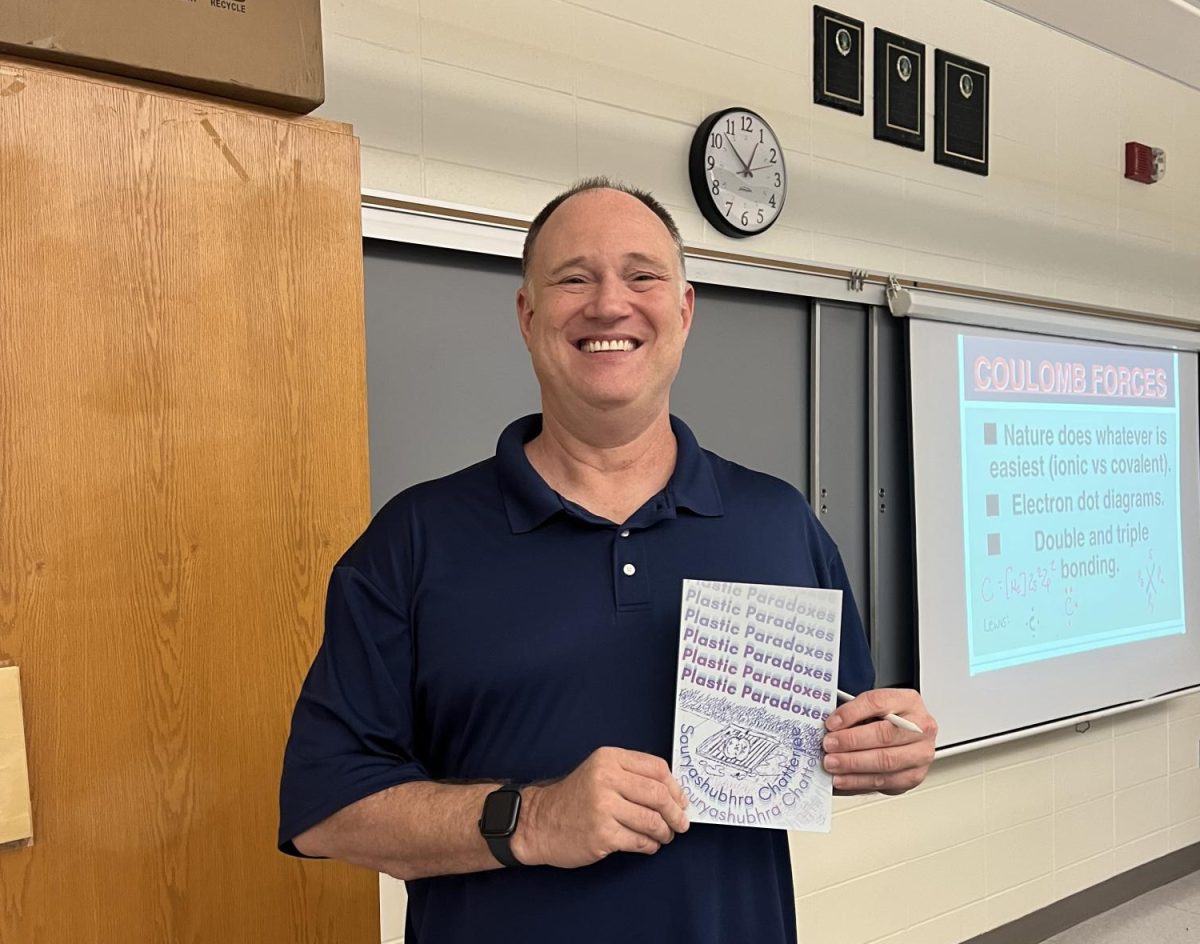











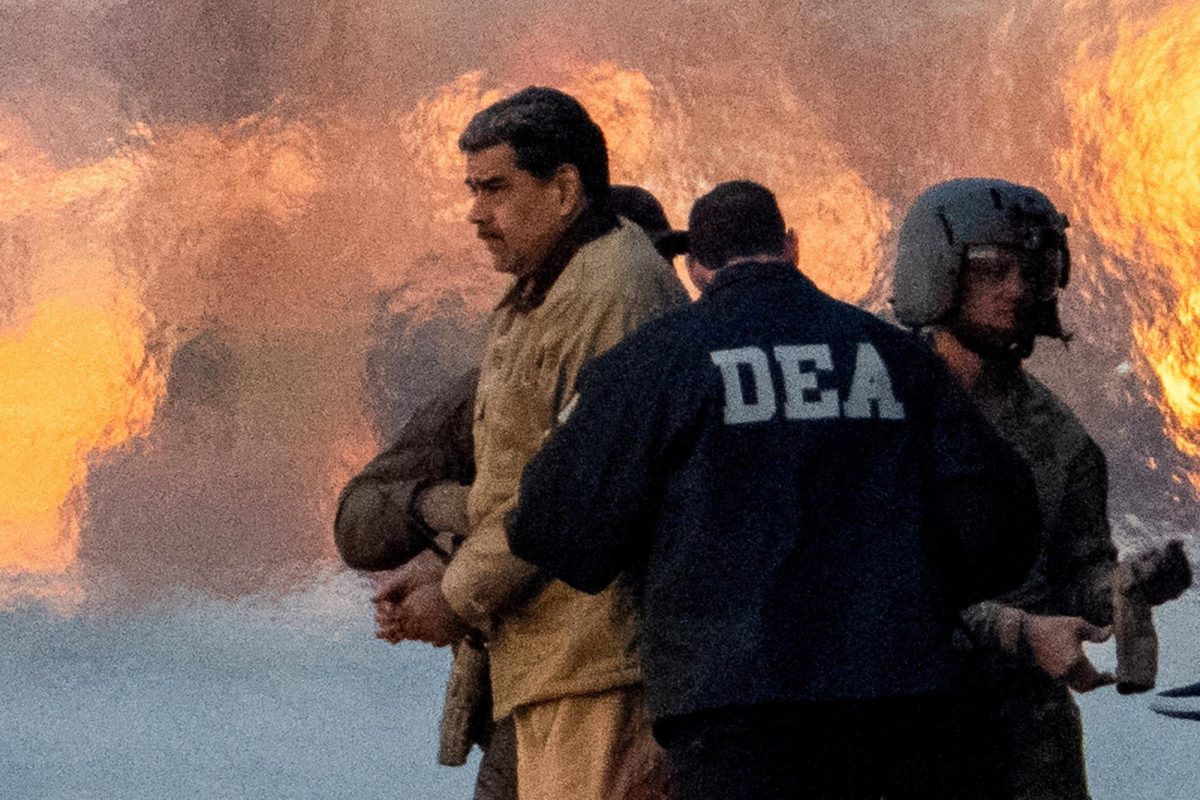
On February 9, 2026, I published an article attacking a specific argument used by many to explain why the US capture of Venezuela’s Nicolas Maduro was wrong. The argument centered around the idea that the intervention was bad because it broke “international law,” and therefore set a precedent that could give our adversaries the pretext to break it as well. I made the argument that international law itself was a dying concept, and one of my good friends, Sourya Chatterjee, made a response arguing why I was wrong on this point. The response was well-written and indicative of his knowledge of current events, but I do believe he is mistaken on many fronts.
One of the first things Sourya points out is that I took the idea of Venezuelans preferring a new administration as a fact. I talked about situations where they cheered for the capture of Maduro, and implicitly made the argument that Venezuelans generally preferred a new administration.
Sourya says, “What about the clips later revealed to have come from outside Venezuela? Why is the Venezuelan population being taken as a monolith? It’s taken as a fact that Venezuelans want a new government, but Om does not provide any backing for a claim which—if proved—could genuinely be good evidence for his later perspective and his general apathy towards the idea of international law.”
Sourya is right about me not showing sufficient evidence that Venezuelans wanted a new government in my piece. I thought most people would know this as prior knowledge because of the buzz created around the issue after Maduro was captured, but showcasing evidence is important, and so I will do that here. Firstly, in Venezuela’s 2024 presidential election, the opposition in Venezuela proved that 67% of the votes were cast in favor of opposition leader Edmundo González. Despite this, Maduro was still crowned the victor by the government-controlled electoral council. Maduro had rigged the vote to stay in power, making him an illegitimate ruler. This strategy of hosting fake elections is common among autocratic states, with the most notable example of these kinds of elections being Russian ones.
Now, it is difficult to accurately pinpoint what percentage of Venezuelans in Venezuela supported the capture, given that Maduro’s party is still in control, and repression of political dissidents still hasn’t ended (many political prisoners were given their freedom after Maduro was toppled, though). Regardless, we can make a pretty good guess based on how poorly Maduro ran the country and how other Latin American countries felt about the intervention. Firstly, under Maduro’s rule, Venezuela went from being a democracy with fair elections to a repressive, authoritarian regime with rigged elections. Over 7 million people, around a fifth of the population, have fled the country since 2014. This exodus was caused by extreme political repression, the murder of innocent protestors, and the economic collapse the country experienced under Chavista rule, a collapse it still hasn’t truly recovered from. Latin America as a whole has dealt with significant issues because of this refugee crisis, which led many Latin American societies to have an extremely sour view of Maduro. Continuing on this point, a majority or plurality of the populations of most Latin American countries supported the actions taken by the US. This includes 78% of Chileans, 69% of Brazilians, and 61% of Argentinians.
Finally, I’d like to address the point Sourya made about how the clips of Venezuelans celebrating Maduro’s capture were recorded outside of Venezuela. As said before, Maduro’s party and many repressive institutions are still in place, so it isn’t necessarily surprising that we didn’t see the celebrations seen in other cities across the globe in Caracas. Government supporters and armed militias still run the show in the country, after all. However, it isn’t surprising that those who fled the oppressive and corrupt Chavista regime celebrated, because they are able to celebrate. A lot of those people lost everything while fleeing their home, which was destroyed by said Chavistas, and it would be fallacious not to take the opinions of exiles into significant account when talking about toppling the leader of the regime which caused them to flee in the first place.
I’d like to clarify that I’m not necessarily sure if free and fair elections will happen because of Maduro’s capture. Venezuela could simply become a nothing-burger of a situation, where no meaningful change happens outside the government bending the knee to the United States. That would be extremely bad and would make the toppling of Maduro, and the breaking of international law done with it, pointless. However, if America’s “list of demands” to the interim president, Delcy Rodriguez, go through, and Venezuela goes back to being a true democracy, I would struggle to find an argument that would be able to truly prove that this action was a net negative on the people of Venezuela, or the free world as a whole.
The response then speaks on how my piece was using “emotional imagery to justify a disregard for the nuances of how people wish to be liberated, and the connection of that fact to international law.”
My counterpoint to this is simple. How exactly were the Venezuelans supposed to be freed? Their people had been protesting for a decade, but the government continued to crack down harshly and send out militias to intimidate and humiliate anyone who opposed their actions. We’ve already seen what can happen when an unarmed populace takes a gigantic risk and tries to completely overthrow a repressive government in Iran, and to no one’s shock, it ends in a bloodbath. The only way Maduro and the Chavistas could have ever been toppled was through foreign intervention, or waiting an unknown amount of time for the weight of the regime to cave in on itself. Since it was able to stand for over a decade, I’d doubt Maduro would’ve gotten out of power any time soon if it weren’t for US involvement. International law might say such an action is illegal, and that those issues should be solved internally, but quite frankly, I don’t care. If there is a brutal dictator stealing a country’s future while working with our enemies and we have the power to capture him with minimal casualties, scare the rest of his government, and potentially force them to stop oppression, then we should use that power, international law be damned.
Sourya then moves on to my main point, where I claim that because countries like China and Russia break international law, we have every right to do it too. Sourya believes that “The fact that America’s enemies are breaking international law does not in any way give America permission to also break it.”
I disagree with this notion. If the enemies of the free world are willing to break international law again and again to attack, bully, or humiliate us, we must do it back to them. This is the doctrine we followed during the Cold War, where we understood that our enemies were willing to break international law to get what they wanted. We even produced nuclear bombs capable of wiping out entire cities, keeping ourselves safe through the doctrine of Mutually Assured Destruction. If we sat with a halo upon our heads following international law to a T, while the Soviets continuously overthrew governments and spread communism across the globe, who’s to say our position during the Cold War wouldn’t have ended up being far worse? I’d like to propose a hypothetical which shows the flaw in logic here. Say an aggressive foreign power began toppling governments and violating international law left, right, and center. Their strategy centers around gaining bases of support across the globe to tip the global scales of power in their favor. What exactly should we do in that situation? Send out some strongly worded statements like the Europeans do currently? Maybe institute some sanctions? No. Fire must be fought with fire, any sign of weakness on our part will translate to another tyrannical action by our enemies. There is no denying that we are in a second cold war, and just as in the first one, international law will have to be set aside at times. We must meet the enemy on every battlefield it chooses to open.
He continues by explaining how I had “completely ignored the benefit that America, being ‘the leader of the rules-based free world’ has had in the past century, and especially since the fall of the USSR in 1991. Om sees those modern authoritarian countries in the same way he sees the United States, and thinks that through a faulty justification of how international law is unenforceable, he may ignore that it was indeed America who had in the past actually enforced international law—to such a point that post 1991 was called by some the ‘end of history’ for how ubiquitous liberal democracy had become.”
Sourya’s point here contains a fundamental misunderstanding of how the “rules-based” world the US wished to run worked. Before 1991, the United States claimed to be the guardian of international law not because it was true, but because of optics. Being the “protector” of international law legitimizes your own cause while delegitimizing your “criminal” opponents, after all. There were an incredible number of American violations of international law before the collapse of the Soviet Union, so much so that I would struggle to name every single one in this article. Many of these violations were for regrettable reasons, such as prioritizing corporate profits while trampling on the democratic systems of foreign countries. Others were, in my opinion, for important reasons, such as fighting back against the encroachment of global communism or stopping brutal genocides. Some of the most prominent examples of America breaking international law included the coups against the presidents of Guatemala and Chile, the invasion of the island of Grenada, the Bay of Pigs invasion, and the constant bombing of Laos and Cambodia during the Vietnam War. What these showed was that America claimed to be the guardians of the rules-based order not because they actually followed the rules, but because it was convenient. Even after the Cold War ended, we continued to break international law in many ways. We illegally invaded Iraq, invaded Panama, and bombed Yugoslavia. Yugoslavia specifically was a brilliant and justified operation, by the way. The bombings were carried out to stop the genocide of ethnic Albanians in Serbia. Yes, bombing a country actively committing a genocide is considered by many to be a breach of international law, since it was not authorized by the United Nations. Regardless, the Kosovars (ethnic Albanians) were so thankful that they built a statue of Bill Clinton in their capital city. We only really stopped breaking international law en masse by 2012, when we had pulled out of Iraq. Even then, many of our actions in Afghanistan past that point still have debated legality.
Sourya says in his response that “America has not always lived up to its self-set standard—not in Iraq, not in Vietnam, etc.—but has always benefited immensely when it has tried to.” However, the constant violation of international law by the US disproves that. America didn’t have just a spotty track record in terms of international law; it just didn’t follow the standards historically, or at least attempted to make an argument to make it seem like they were following them by bending the rules or using faulty justifications. I will once again say that this does not make every one of those justifications wrong, but it is undeniable that they were illegal.
The benefit Sourya believes existed from international law is centered around the idea that stability is good for markets, and that the West would benefit from following American-written rules. He also criticizes how I called “international law a ‘dying concept,’ but it is only dying for America’s recent abdication to populism, a tradition which kills America’s long bias towards order and stability (what other nation has had one government system since the eighteenth century?).
Sourya is correct in that stability is important for markets. After all, no one wants to invest in unstable markets, systems, or countries. However, it’s not as if Venezuela was left severely destabilized after the intervention, given how Maduro’s party and cabinet are still largely intact. While oil companies are still generally apprehensive of investing, the chances of investment are certainly higher than they were under the nationalized oil industry of Venezuela years ago. If we are speaking on the violations of international law as a whole, this argument is largely irrelevant as shown from historical evidence. Large corporations and markets benefited from regime change in countries like Guatemala (as mentioned before), and more recently, Iraq. While Sourya is somewhat correct in saying “America has always loved a good, stable, free, liberal market,” targeted countries generally do not have free or stable markets. I am not making the argument that violations of international law centered around opening up markets is always a good thing. In fact, I believe that countries have a right to sovereignty and nationalization of industry (as long as the private actors having their capital nationalized are fairly compensated). However, to say that markets only benefit from stability, and that violating international law will, as a rule, affect markets negatively, is not a fair analysis of history.
Sourya then discusses my point about freeing civilians from authoritarianism. He argues that if the United States is “going around overthrowing regimes based on viral videos, the United States itself may be seen as authoritarian too. That makes sense, doesn’t it? Because through justifying the breaking of international law like authoritarian countries who the United States apparently has no effort being “nice to,” the United States becomes no better than them.”
Throughout my argument, when I spoke of authoritarian countries, I spoke specifically about those governments that are not democratically elected, whose people are unable to influence the way the government operates meaningfully. Essentially, authoritarian and “non-democratic” meant the same thing in my piece. I am aware that this definition is contested, a leader can be an authoritarian and be democratically elected, but for the sake of simplicity, I used this definition. To keep things simple, I will continue to use the terms interchangeably. Regardless, when Sourya speaks of authoritarianism, he seems to mean that while the US government isn’t generally authoritarian towards its own people, it is authoritarian towards other governments, not allowing them to “choose their paths.” This, in turn, makes the US no better than other countries who are authoritarian to other countries as well as to their own people.
I’ve already given my reasoning as to why breaking international law because the authoritarians do it is justified. Historically, we followed this kind of strategy when combatting the Soviet Union, and yet we were better than them. Sourya is right in the sense that we weren’t better than them at following international law, however. Instead, we were better because we gave our people freedom, dignity, and human rights. We also followed the economic system of capitalism, the superior model to authoritarian socialism. We fought on the side of these principles for decades, and committed many atrocities to keep the fight going. Many of our actions were wrong, needlessly violent, and absurd, but in the end, the world certainly breathed a huge sigh of relief knowing the western democracies triumphed over the decadent, genocidal empire that was the USSR. Just ask the Eastern Europeans who cheered when being freed from Moscow’s jaws. No Western European society would’ve reacted the same way if the US had lost the Cold War, that I guarantee. Any sane person would prefer a liberal democracy as the world hegemon over an authoritarian regime, and that is what makes us better.
If we want to go by Sourya’s definition, then yes, we are “authoritarian” towards other countries. We didn’t respect the choices of many governments and in turn, we destroyed them. We’ve been like that since our entrance in World War 2. While being extremely belligerent and threatening to our own allies (as Trump has been towards the presidents of Colombia and Mexico) is idiotic and destroys our soft power and reputation, attacking and sabotaging our sworn enemies does not have the same effect.
This moves into Sourya’s final point, where he says “Om’s critical flaw in logic is that he does not understand that keeping international law is in no way meant to be honest to America’s enemies, it’s to be honest to America’s partners in the developing world. International reputation—which until recently America possessed—is a resource rarer than oil, or natural gas, or any rare earth mineral, and America’s disdain for the world it created itself is probably the most dangerous and idiotic trait it can have.”
The notion that following international law is to “be honest” to our third world allies is questionable. Already we have seen that many Latin American societies and governments (most of which being low-income), supported the operation to pluck Maduro out of Venezuela. On a broader scale, the world at large seems to care more about how different administrations act towards their countries specifically, rather than having qualms with American violations of international law as a whole. Approval ratings of the US have fluctuated significantly over the past decade, but one thing that is clear is that approval ratings generally dropped when Donald Trump took power, and stayed generally high when Obama or Biden were in charge. This includes Trump’s first term, where violations of international law that were a step above those committed by Biden or Obama were noticeably absent. Our reputation with our allies and partners is not based on a following of international law, but instead a question of whether or not American rhetoric is hostile, arrogant, or isolationist. Donald Trump has constantly used hostile language when talking about the Europeans and many Latin American countries, and while some issues (such as the Europeans not paying their fair share for the continent’s defense during his first term) were valid, blanket tariffs and entering trade wars with our own allies is a horrible strategy which limits our ability to stop the encroachment of hostile powers on the free world.
I will say that Sourya is right when saying America showing disdain for the rest of the world, and in turn causing the world to have disdain for it, is a dangerous trait to have. While we must combat, sabotage, and defeat our enemies wherever we can, we must not be irrational when dealing with the outside world. Just as we treat our enemies badly, we must treat our friends well. America can arguably survive on its own, but we can bring about a true “End of History” if we are steadfast in our willingness to defend ourselves, our values, and our people.