


















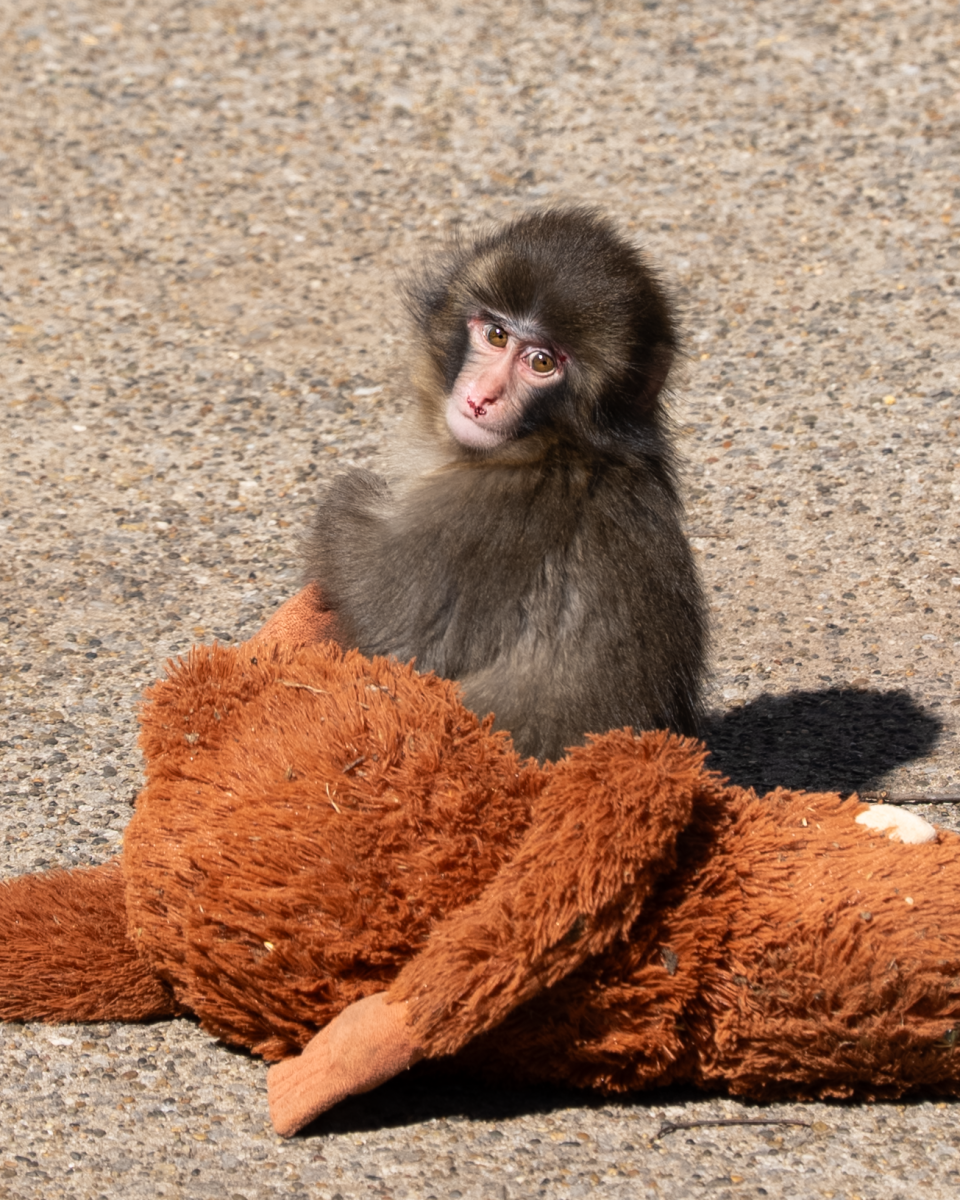
When seven-month-old Punch, a Japanese macaque at Ichikawa City Zoo and Botanical Gardens, was rejected by his mother, the internet reacted with outrage and sympathy. Viral videos show the young monkey wandering alone, holding onto a stuffed orangutan, as he runs and takes cover from older monkeys chasing and dragging him across the enclosure. To many viewers, Punch appears to be a victim of cruelty. Researchers, however, say the situation reflects the species’ complex biological and social realities rather than brutality.
Although maternal abandonment among primates is rare, it is not unheard of. Alison Behie, a primatologist at the Australian National University, explains that a mother’s experience level, physical condition, stress, and environmental pressures can influence her behavior. Punch’s mother was a first-time parent. Punch was born during an intense heatwave in July 2025. The harsh environmental conditions may have elevated stress and put a strain on limited resources. In these circumstances, mothers may prioritize their own survival and future reproduction over caring for an infant who may struggle to thrive. What appears cold through a human lens can be an evolutionary survival strategy shaped by natural selection.
Much of the public reaction has focused on claims that Punch is being “bullied”. Primate specialists note, however, that Japanese macaques live within strict, matrilineal hierarchies. Rank determines access to food, grooming partners, and protection. Infants typically rely on their mothers not only for nourishment but also for social shielding and status within the group. Without maternal backing, Punch lacks a protective and social buffer, leaving him vulnerable as he navigates the social order on his own.
The absence of Punch’s maternal care places zoo staff in a delicate position. Removing him from the troop could reduce the risk of physical harm, but isolation carries its own risks. Dr. Emily Bethell, a primate cognition and welfare expert at Liverpool John Moores University, tells reporters that the greater danger may be long-term psychological damage if the punch fails to develop normal social bonds. Young Macaques learn essential life skills through daily interactions such as interpreting facial expressions, understanding dominance cues, and forming alliances. Without that education, reintegration later in life becomes far more challenging.
Zoo officials have stated that they are closely monitoring his progress and will intervene only if aggression escalates to a serious level. Some visitor footage suggests gradual improvements, including brief grooming sessions and closer proximity to other macaques, though outside observers have limited access to confirm daily conditions. The situation underscores an ongoing debate in animal welfare: “how to balance immediate physical safety with long-term need for social development?”
Punch’s story has resonated far beyond his enclosure, largely because it feels so easy to understand through a human lens. A small, vulnerable infant navigating the world without his mother is an image that strikes a nerve. Beyond the viral clips and emotional reactions, his situation reflects the complicated realities of primate life, where survival, hierarchy, and development do not always align with our sense of fairness. The stuffed companion that captured so much attention is just one small detail in a much larger picture. What remains most significant is the reminder that attachment and belonging are powerful forces in any social species, even when they unfold in ways that are difficult to comprehend.