






















Click for more on the Artemis II mission
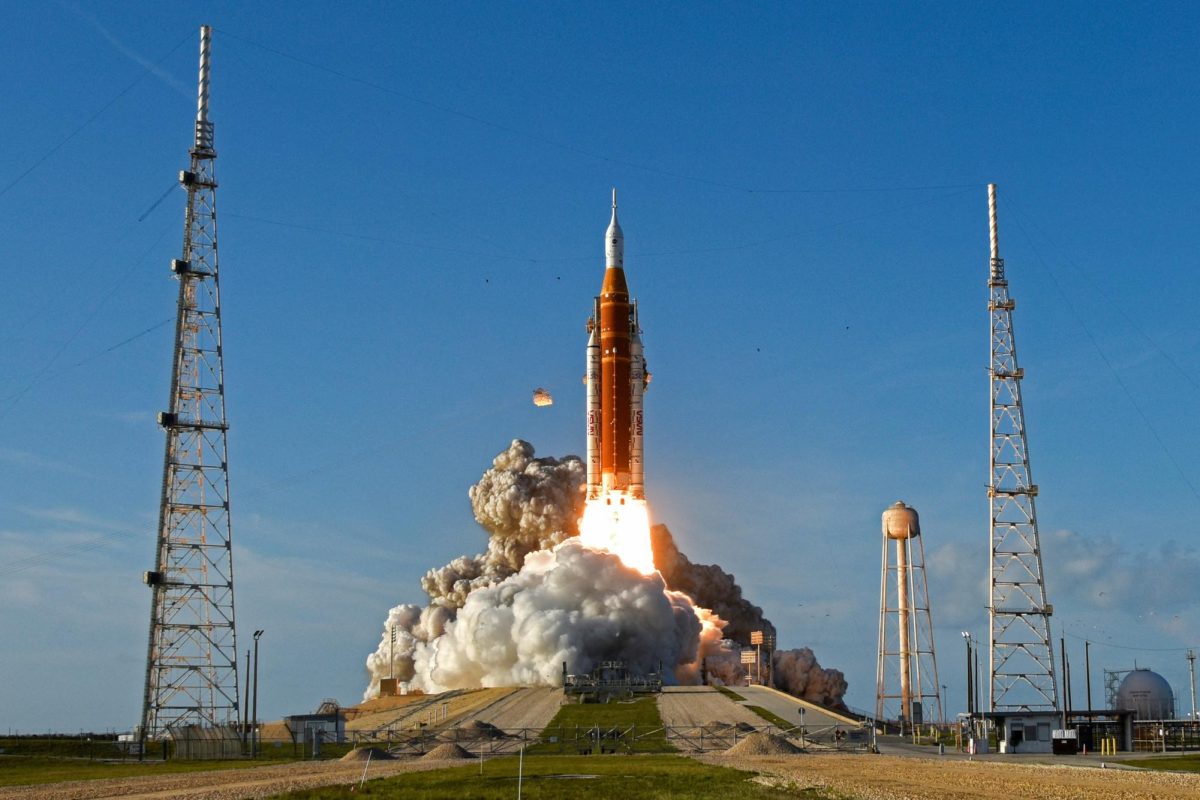
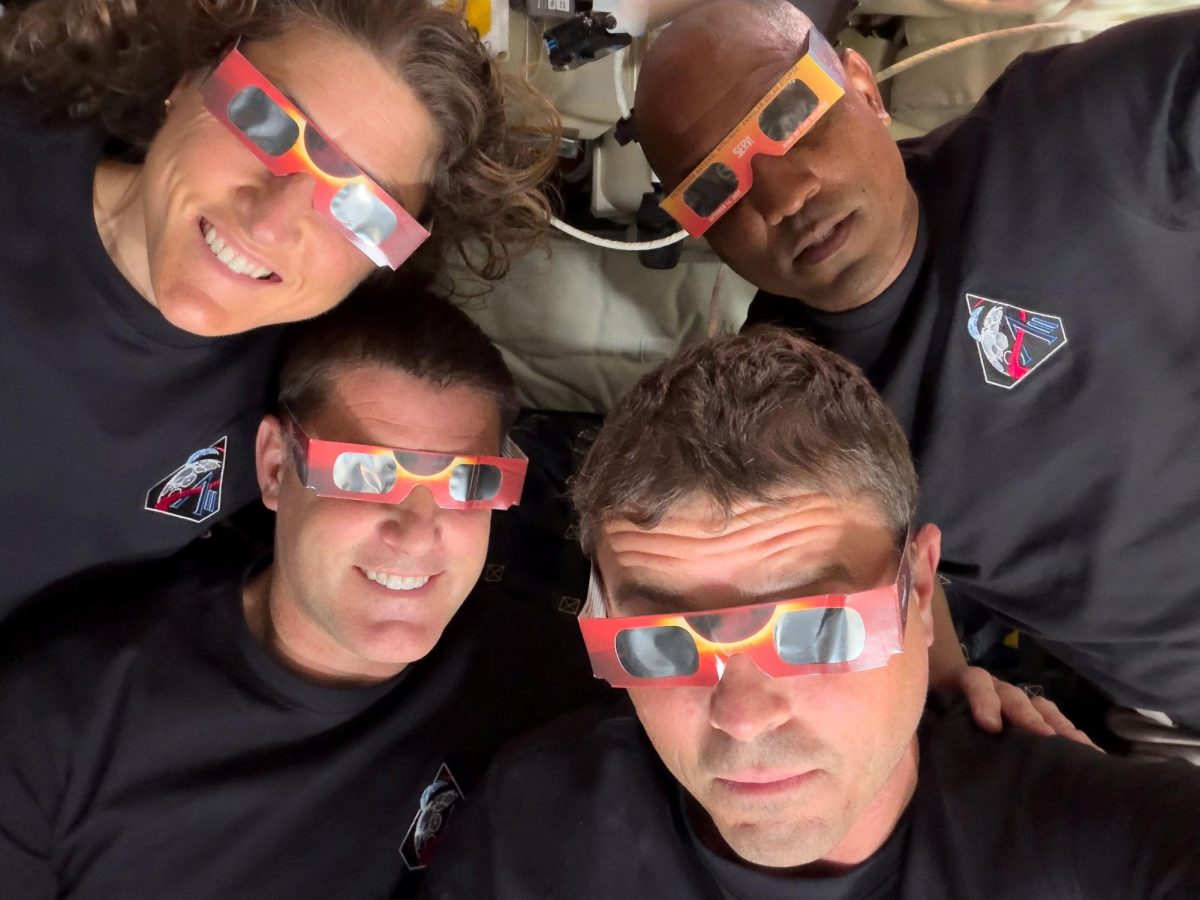
3…2…1…For the first time in roughly 50 years, humans have launched towards the Moon. On Wednesday, April 1, four astronauts boarded and took liftoff from the Kennedy Space Center in Florida. The team includes Reid Wiseman, Victor Glover, Jeremy Hansen, and Christina Koch; Koch being the first woman on a lunar mission while Glover the first person of color on a lunar mission–a few first to many powerful moments in history. The trip is a 10-day mission, with the estimated time of return to be this Friday, April 10, splashlanding off the coast of California.
Now you may be wondering, why are people launching towards the Moon again, and why are they not actually landing on it? Well, there is a larger purpose behind the trip. Though the stunning pictures we are receiving from NASA show updated and quality images of our solar system and new angles of the Moon, the main purpose of their mission is to test “NASA’s human deep space capabilities.” Basically, they are using the Artemis II mission as a test for future lunar trips and to eventually send crew to Mars.
So, let us break down the specifics. The most important objective of NASA is to validate the Environmental Control and Life Support System (ECLSS) because this is the first time that the Orion spacecraft, the airship they are currently aboard, is supporting humans. That being said, they have to test the ship’s performance with four people, oxygen, CO2, and different environmental changes (such as moisture) that will occur over the 10 days; Along with testing the easy and hard aspects of working in a microgravity environment.
A challenge to the mission was manually steering for several hours. This happened early on the mission, after the separation of the rocket and upper stage. It is mandatory for the pilot to learn the skill of “hand-flying” because it ensures that in cases of emergency, they are capable of taking over. Though this deals with cases of emergencies where failures occur in the automated docking system, communication and navigation is also being tested in cases of sudden failure. Just this Monday, April 6, there was a total blackout for about 40 minutes. This happened as the Orion spacecraft began to travel behind the far side of the Moon–or the “dark side.” Because they were completely behind it, it blocked radio signals that are connected between the spacecraft and NASA’s network. It was expected that this would happen, but it still proves that work needs to be done to expand communication–or else a longer, several month trip to Mars will not be possible.
The final test is making it back to Earth safely. As the spacecraft travels back to Earth off the Moon’s gravitational pull, it will enter the atmosphere at a rate of 25,000 mph. It is entering at a much faster and hotter rate than usual because NASA wants to test the capabilities of the heat shield and its performance.
As Artemis II begins to make its way back on Earth, they are able to prove what the spacecraft is capable of and what it may provide in the future for their Moon to Mars transition.