




















Click for more on the Artemis II mission
From April 1 to April 11 of 2026, NASA conducted its Artemis II mission, a 10 day journey where astronauts were launched in a slingshot around the Moon and came back safely to Earth. In its entirety, the Artemis program consists of 5 phases; its ultimate aim is not only to bring back moonwalks, which have been halted since the last Apollo mission to put men on the Moon in 1972, but go even beyond by setting up shelter on its surface.
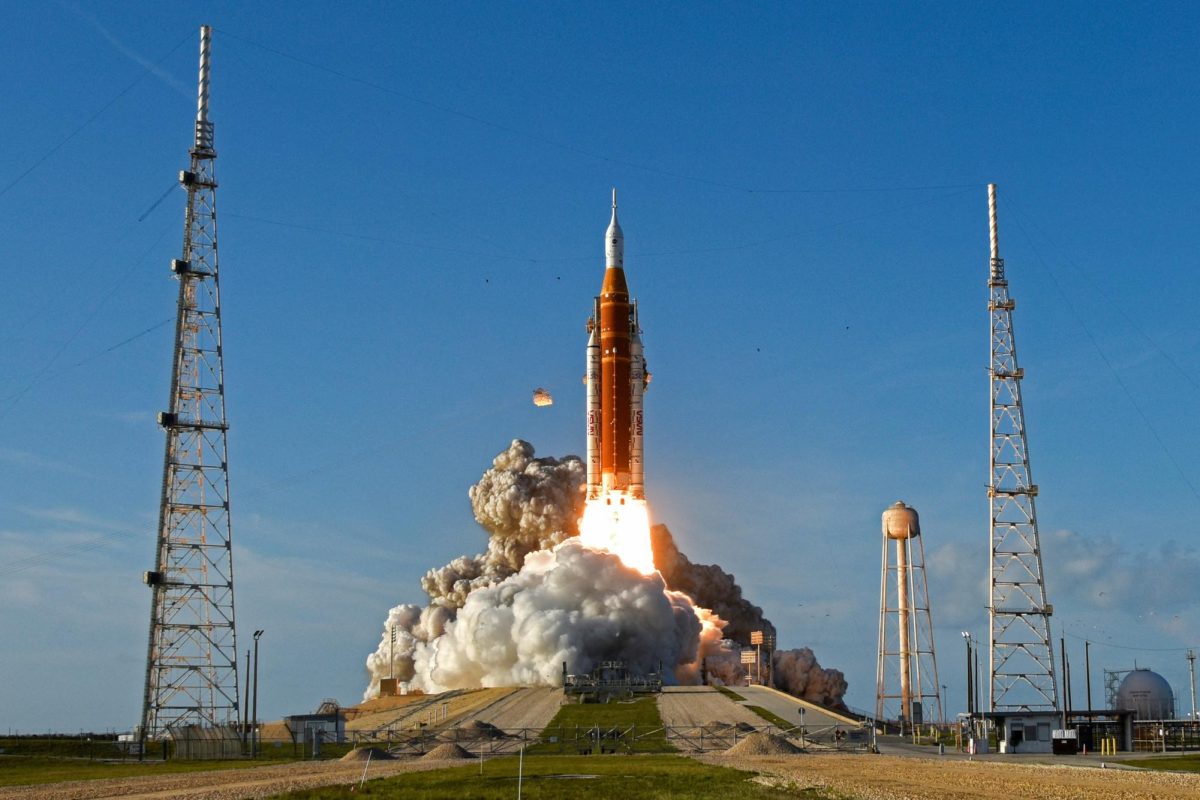
In 2022, the uncrewed Artemis I was successfully completed where the newly developed Space Launch System (SLS) Operation and Orion spacecraft were launched in a test flight, attempting to orbit the Moon and land back safely. The SLS uses two 5-segment rocket boosters and four RS-25 engines to lift the ship with over 3.6 million pounds of thrust. In short, these are the most powerful rocket engines ever built. The development of these two technologies has cost over $44 billion, including the storing of over 730,000 gallons of liquid oxygen and hydrogen as fuel.
The second and current phase of the mission, Artemis II, itself consists of 15 parts. Parts 1 to 6 are where the spacecraft launches off the ground, separates into just the main craft while leaving behind the fuel carriers, and exits the atmosphere. In parts 7 to 11, the ship orbits the Earth and then launches towards the Moon, where it completes a flyby orbit in a trajectory going towards the lunar farside and then turning around back home. Parts 12-15 are an aim, boost, and enter back to the Earth’s atmosphere, where the astronauts eventually parachute into a splashdown in the Pacific Ocean, coming home safely. The crew flew according to plan, adjusted for space conditions, and broadcasted an interview detailing the flight and journey from right up near the lunar surface.
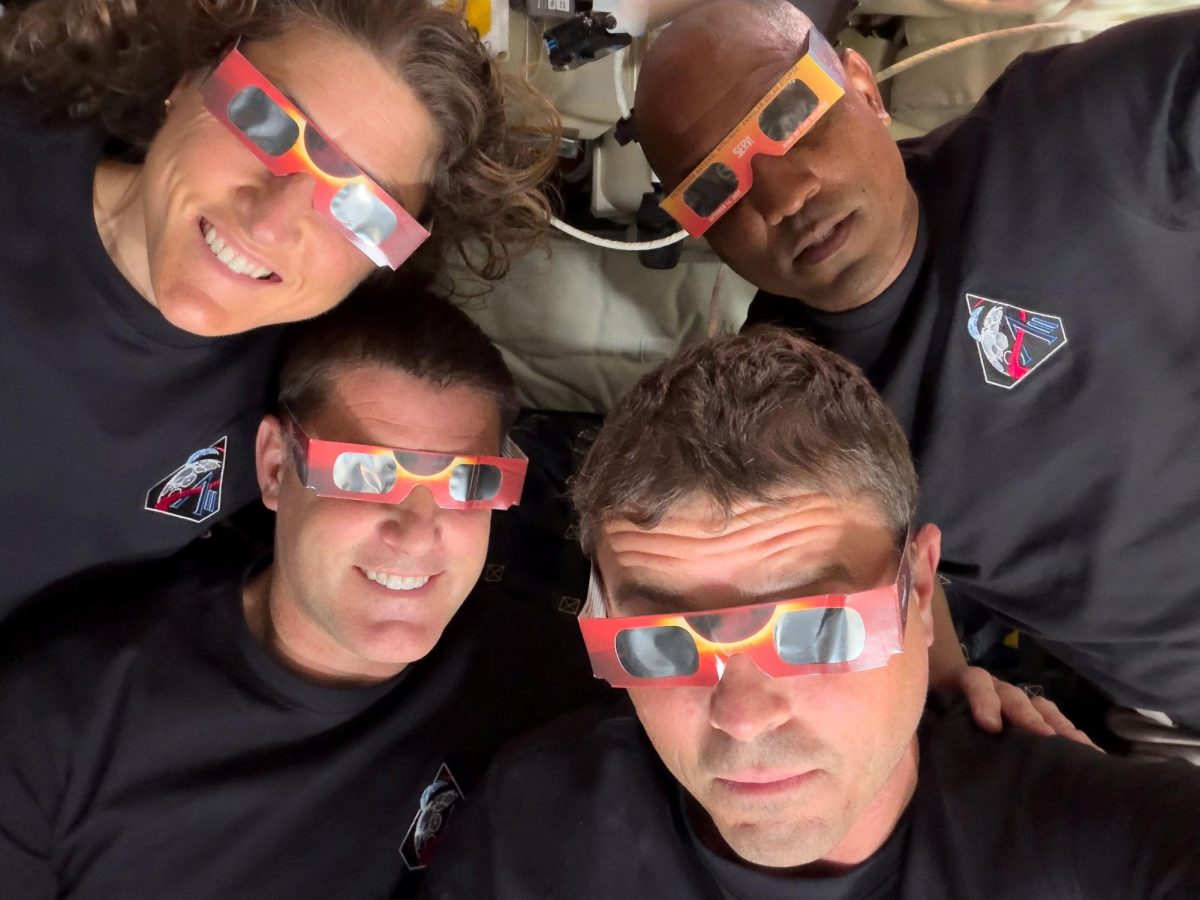
Orion is manned by a crew of only four astronauts: Commander Reid Wiseman, Pilot Victor Glover, and Mission Specialists Christina Koch and Jeremy Hansen. The reentry equipment, made of silica- and resin-based Avcoat, allows the ship to hit the atmosphere at 25,000 miles per hour, equivalent to Mach 32, while protecting it from 5,000 degrees Fahrenheit of heat—half the temperature of the surface of the Sun. This flight marks the hottest that spaceships have gotten, the farthest humans have ever traveled from Earth at over 250,000 miles at the far side of the Moon, and the fastest speeds which humans have ever traveled at.
Artemis III is planned for 2027 and will be the first crewed lunar landing of the mission, planning to land near the lunar South Pole, and mainly being done to test the ability of Orion to dock properly. Interestingly and for one of the first times, NASA worked with both SpaceX and Blue Origin, testing their lunar landing technology to ultimately determine which to use for the year after’s mission, where the crew will be setting foot on the lunar surface. NASA is also working with SpaceX to use their almost-perfect reusable spaceship technology through the famous Starship vehicle to transport all Orion spacecraft.
Artemis IV and V are both planned in 2028, the former scheduled for early in the year and the latter being later. Artemis IV will be the first lunar landing in over 50 years. And if all previous tests from that point are successful, the four astronauts will walk on the Moon and install machinery on the surface, all the while Orion orbits the Moon, eventually returning to rendezvous with the crew back to Earth. For Artemis V, NASA plans on another lunar landing, this time to begin the development of a habitable Moon base camp.
To prepare for the missions, the astronauts spent three years going in the Orion Mission Simulator, which is a replica of the spacecraft and mimics the conditions it would face in space. They worked through various possible issues that could arise, mastering the technology onboard, and running through their mission scenarios. They mastered all aspects of communication, observation inside and outside Orion, and spaceflight in case they needed to take over from Houston or automated systems inside. Photography was also important to this particular mission, and the crew trained to use a wide variety of cameras—including an iPhone—to ensure they take many pictures. This training was successful, as the astronauts sent back breathtaking pictures of the Moon, Earthsets, and even a solar eclipse.
If all goes well, the Artemis program could be revolutionary—the next great leap for mankind. The Artemis Base Camp will finally allow for long-term human residence on the Moon—up to two months—opening the possibilities of experiments wider than ever before. The base will consist of the Surface Habitat, which is the main foundation for the astronauts; the Lunar Terrain Vehicle, which is a modified ground transportation rover; and the Pressurized Rover, which give astronauts backup habitation technology in case they venture out for a long period of time.
While all this innovation is exciting and humanity seems eager to leave the ground, focusing on this mission still comes with a cost. Political, social, and environmental problems on Earth are still long away from being solved, of course. But ever since the beginning of the Space Age in 1957, exploration outside our planet has allowed all of humanity, in all corners of the globe, to innovate, clean up, and explore together. And with Artemis, we could connect to levels where we not only explore what’s outside, but also clean up within.