













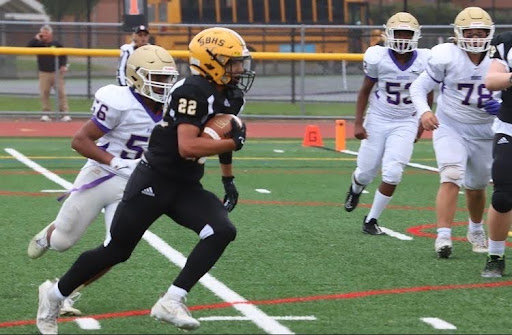


It’s common for beginners to skip abs and legs, because they aren’t as fun as most upper-body exercises. Not only are they crucial to balancing hormones, but they also make your physique complete and much more impressive than an upper-body-dominant physique. Training legs and abs may not be the most fun, but it’s important to train them anyway. Most lower-body training is overcomplicated, so growth is stunted.
A common misconception is that abs are made in the kitchen. While it’s true that you can only see abs at a low body fat percentage, you still need the actual abs, just like any other muscle. Your abs all work together, so you can’t bias regions of them. This means you only need one exercise, which involves spine flexion. In other words, do any ab exercise where you bend your spine and you will be good. This can be a machine crunch, a cable crunch, or just bodyweight with high reps. Overload overtime, recover well, and you will be guaranteed to grow big abs.
The leg muscles that you will be training are your quads, which are the front of your leg, and above your knees, your hamstrings, which are behind your leg, and also your knees, your glutes, which are basically just your butt, and your calves, which are behind your shin. For glutes, just do a hip thrust. There’s no need for fancy exercises or a variety of machines. One exercise should do just fine. If glutes are a strong priority for you, however, you may want to add an abductor exercise, but for the average person, it isn’t really necessary. For your calves, all you need is any variation of a calf raise. Again, one exercise should suffice. Your quads are worked when your legs are extended, meaning you are straightening your leg. You can get away with just a leg extension, but you may need to do a lot of sets, as your quads are incredibly strong and can take a bit of a beating before they wear out. Instead of that, I recommend doing a leg extension for 2 sets, then adding some form of pressing or squat pattern, whether it’s a leg press, a hack squat, or even a barbell/dumbbell squat (although it would be more beneficial to pick a more stable movement). For your hamstrings, start with any form of hamstring curl; the bias between seated and lying won’t make much difference in the end. You should also be doing a hip hinge movement, basically some deadlift variation, or 45s, if that is something you find enjoyable. Hip hinges are very important, especially for beginners, as it is a compound movement and will give you a lot more stimulus than a hamstring curl alone.
Just like any other muscle, you should be training your lower body twice a week. A common problem, especially for beginners, is that they are too sore by the second leg day, due to the intense training on the first day. If you have this problem, then you are doing too much volume in one session. You don’t need more than 1-2 exercises per muscle, and you don’t need more than 2-3 sets to failure. Experiment with different exercises, set ranges, and find what you enjoy and what you can recover from.
Remember that when it comes to lifting, your recovery is just as important. Make sure you’re sleeping 7-8 hours and eating 0.8-1g of protein per pound of body weight, to stimulate muscle growth. Remember to stay consistent and follow this advice, and your legs are guaranteed to grow.