





















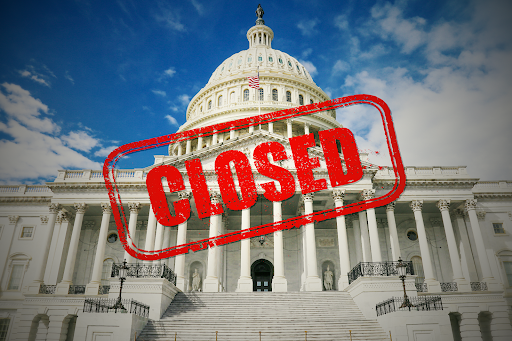
On November 12, after 43 days, President Trump signed a funding bill that reopened federal agencies and restored services that millions of Americans depend on, ending the longest government shutdown in U.S. history.
The shutdown took place because Congress couldn’t agree on a budget. Republicans passed a funding bill in the House, but Democrats in the Senate refused to vote for it unless it included money to help people afford health insurance. The Republicans disagreed, and neither side would compromise for over a month. While politicians argued in Washington, D.C., the rest of the country paid the price. Nearly 1.4 million federal employees were either furloughed (being granted a temporary, unpaid leave of absence from work) or required to work without pay. Imagine going to work every day for six days without any compensation. These aren’t politicians. They’re TSA agents at airports, park rangers, food inspectors, and office workers just trying to support their families. “Every missed paycheck deepens the financial hole in which federal workers and their families find themselves,” said Everett Kelley, head of the American Federation of Government Employees.
While federal law says these workers will eventually receive their pay, that does not help when rent is due or groceries are needed. Many federal employees had to dip into savings or max out credit cards just to get by. The most devastating impact hit families who rely on SNAP benefits (commonly called food stamps). About 42 million Americans, many of them working families who don’t earn enough to cover basic expenses, depend on this program to put food on the table. On November 1, the Trump Administration stopped all SNAP payments. For more than a week, families had no idea where their next meal would come from. Parents had to choose between feeding their children and paying for gas to get to work.
With Thanksgiving right around the corner, the Federal Aviation Administration had to cut flights by six percent because air traffic controllers and TSA agents were working without pay. Transportation Secretary Sean Duffy warned the cuts would get worse. Families trying to visit relatives for the holidays faced cancelled flights, long delays, and massive crowds at airports. Kevin Hassett, the White House National Economic Council Director, told FOX News that flights would be “almost back to normal” by Thanksgiving weekend, but for many travelers, the damage was already done.
Many small businesses estimated significant losses during the shutdown. Hotels, restaurants, and tour companies dependent on tourists spending lost income. Most of these businesses were likely family-owned, operating on tight margins and struggling amid customer losses. Economists estimated the shutdown cost the economy billions of dollars, with local businesses feeling the effects when federal workers and families relying on SNAP benefits reduced their spending. The shutdown created a ripple effect that spread through nearly every part of the economy.
On November 10, a few moderate Democrats decided that enough was enough. They voted with Republicans to pass a funding bill that keeps the government running through January 30, 2026. The deal didn’t include the health insurance subsidies Democrats wanted originally, but it did include an agreement to hold a separate vote on that issue in December. Six Senate Democrats joined Republicans to pass the bill on November 12, with President Trump signing it that same evening. The good news? Food stamps are flowing, Federal workers are getting paid again, and airports are slowly but surely returning to normal. The bad news? With the government only funded through January, we could be right back here in no time.
Even if your family wasn’t directly affected by this shutdown, it’s a reminder of how we all depend on a functioning government. When politicians struggle to work together and reach an agreement, working families end up paying the price. Not through taxes or policies, but through empty paychecks, empty refrigerators, and the uncertainty of the future. The fight over healthcare subsidies and government spending is nowhere near an end. With another funding deadline approaching on January 30, Americans may face this same uncertainty again soon. The real question is whether politicians learned anything from putting 42 million people’s grocery money on hold for a political point. For now, the shutdown is over. But for households that have suffered in the last 43 days, the effects will last much longer than we think.