















This past school year, Mr. Friedman and Mr. Honig’s AP Language and Composition classes wrote a full year process essay on any topic of their choice. We called this The Eagle Essay, after the final paragraphs of Annie Dillard’s classic essay “Living Like Weasels.” After the submission, students read and evaluated their classmates’ essays and selected the top two per section. The Viking Vibe is proud to publish these top essays throughout the summer. Check back in every Monday to see these outstanding essays, selected from over 140 total works. Enjoy!
There’s a certain type of frustration that happens when I think I’m ready, and then in front of everyone, I realize I’m not. I’ve felt it on competition fields, in classrooms, and in conversations where I wish I had said something smarter than what I actually said. The feeling is always the same: a subtle drop in confidence, as if something slipped, but I’m not sure what. It’s not loud or dramatic in any way, in fact it’s quiet and internal, but it sticks around longer than the moment itself, and even after everything moves on, that feeling stays, replaying itself in the background of my mind.
What makes that moment difficult is not just the mistake itself, but how quickly it becomes something larger. A single misstep doesn’t stay contained but instead grows into something that feels like evidence, something that starts to define how I see my own abilities rather than just what happened in that moment. It’s rarely about the actual consequence of the mistake. Most of the time, the external impact is small. What makes it significant is how it shifts my perception internally. One mistake becomes connected to others, forming a pattern that feels more permanent than it actually is.
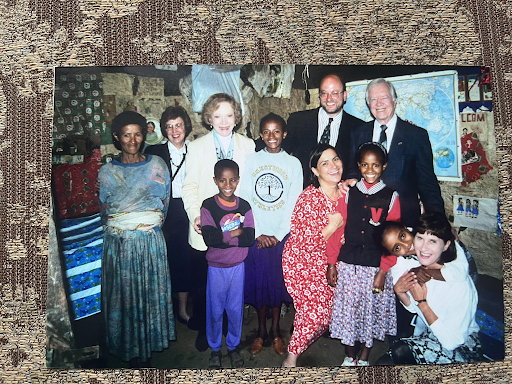
That reaction didn’t start with robotics. It’s something I’ve carried with me for a long time, even before I had a way to describe it. Growing up, I was always aware, sometimes subtly, sometimes directly, that the opportunities I had were not guaranteed. My parents would talk about their experiences, especially my mom, who grew up in Ethiopia in an environment where her access to education wasn’t consistent and basic necessities were rarely secure. Instead of going to school, she often had to cut and sell trees to earn enough money to buy bread for her family, sometimes only earning enough for one piece of bread for her mother, 3 siblings, and herself. She didn’t present these experiences with resentment, but surprisingly with appreciation. To her even though her time living in Ethiopia was extremely difficult and tough, being able to use every opportunity, despite how small, to help her family was what truly mattered and gave her enjoyment. This made me realize that purpose in life is not just to follow what you desire but to do so with conviction and to take every opportunity you get, not taking anything for granted.
Looking back there’s a small moment where this became even more real to me. I was walking with my mom, and she was explaining how limited schooling had been, how certain opportunities simply weren’t available, not because of her abilities, but because of her difficult circumstances. There wasn’t a dramatic pause or a lesson attached to it. At one point, she just said, “Knowledge is power” the way she said it wasn’t motivational but more so matter-of-fact. But that’s what made it stay with me.
At the time, I didn’t fully understand why it mattered so much. But over time, that phrase started to shape how I approached everything. It stopped feeling like advice and started feeling like something I was responsible for. If she didn’t have access to certain opportunities, and I did, then there was an implicit expectation – not from her, but from myself – that I should make the most out of them. That idea didn’t feel heavy at first, but it slowly became part of how I measured myself and how I approached nearly everything in my life.
Because of that, success – regardless of what situation – started to feel less like a goal and more like an obligation. Not in a forced way, but in a quiet, internal way. I didn’t want to waste opportunities that someone else never had. And over time, that mindset started to influence how I interpreted mistakes. They didn’t just feel like a temporary disappointment but they felt like a painful thought that permeated in my mind, “I should’ve been better”.
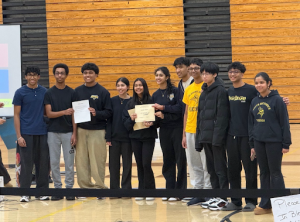
Before every robotics competition, I tell myself we are ready for this. Our robot sits aligned on its starting tile, its wires neatly tucked in, code uploaded, autonomous mode practiced until it feels flawless. I’ll crouch down slightly to check alignment again, even if I’ve already checked it twice. I’ll glance at the wiring, making sure nothing is loose, making sure everything looks exactly how it should. Everyone else seems focused on strategy, making last-minute adjustments, while I go over my checklist in my head again.
I don’t just go through it once. I repeat it. Motor connections. Sensor turned on. Battery levels. Code version. Starting position. I mentally simulate the first few seconds of the run, imagining how everything should unfold. But despite how confident I may look, there is always a thought in the background: Did I miss something?
That thought doesn’t come from nowhere. It comes from experience. It comes from knowing that even when everything appears correct, something small can still go wrong. But it also comes from something deeper, the idea that if something does go wrong, I should have been the one to catch it.
When the buzzer goes off, it’s not just the robot being tested. It feels like I’m being tested too. The moment everything starts, my attention narrows. I’m watching small details – the initial movement, the timing, the alignment – looking for any sign that something might go off track. And when it does, it happens quickly.
When the robot veers off course or something breaks during the routine, the mistake doesn’t stay on the field. It follows me home. That night, I replayed the event over and over, trying to determine what went wrong. I’ll go through it step by step, almost frame by frame, reconstructing the sequence in my head. At first, I focused on the technical side. Maybe the sensor value was slightly off. Maybe friction affected the turn. Maybe something shifted that we didn’t account for.
But eventually the question changes. Should I have done something differently? Would someone else have noticed the mistake sooner? Did I overlook something obvious?
Those questions don’t feel analytical like my initial thought process. Instead they feel interrogative, as if their goal isn’t to understand the failure but rather to assign responsibility for it. And more often than not, that responsibility turns inward.
Robotics has forced me to confront something uncomfortable. I measure my success by results, and I measure it far too much. That tendency isn’t just about competitions but how I’ve learned to think about opportunity. When you grow up understanding that opportunities are limited in many parts of the world, it becomes difficult to treat your own casually. You don’t just want to do well, you feel like you should do well.
Because of that, outcomes carry more weight. A success feels like confirmation that you’re doing what you’re supposed to. A failure feels like something you didn’t fully take advantage of. That mindset can be motivative pushing me to work harder, to prepare more, to stay focused. But it also creates pressure that isn’t always productive.
This tendency is hard to avoid in an environment like robotics, where competition is constant. At every event, there are dozens of teams with robots they’ve spent months refining. As I walk though the competition pits, I see robots that look cleaner, faster, and more refined than mine. I notice how smooth their mechanisms operate, how precise their movements are, how controlled their autonomous routines look.
I don’t just observe. I compare.
I start to think about what they did differently. Did they design something better? Did they test more thoroughly? Did they catch something I didn’t? Instead of focusing on how my design can improve, I start to question whether it was good enough to begin with. That shift can happen quickly and sometimes almost automatically.
My solution to that problem, for a long time, was simple: work harder. I thought that if I practiced enough, tested enough, and thought through every possible scenario, I could eliminate mistakes – guaranteeing I made the most out of every opportunity, and thus fulfilling my identity. I stayed after meetings longer, ran additional tests, refined code repeatedly, and tried to anticipate every possible failure.
But robotics quickly disproved that theory. No matter how many times we simulate a run or test our code, something unexpected could still happen on the field. A sensor could misread a value. A motor could overheat. A slight misalignment could send a robot drifting in the wrong direction. What I began to realize is that unpredictability wasn’t something I could eliminate, it was something built into the system.
That realization was uncomfortable to me, because it challenged the idea that effort alone could guarantee results – an understanding that made it possible that I could take advantage of every opportunity I had.
However, when reflecting it was never just the failure that unsettled me. It was how quickly I could turn those failures into personal judgements. A misaligned sensor meant I wasn’t careful enough. A lost match meant I wasn’t ready to lead. A small mistake became connected to a larger conclusion.
I soon found myself recognizing how often I based my confidence on these outcomes. I cared about doing things right, and I cared about being someone my team could rely on. But when that reliability became tied entirely to results, it created instability. My confidence would rise when things went well and drop when they didn’t, even if the effort stayed consistent.
Engineering writing describes failure very differently. In To Engineer is Human, Henry Petroski explains that failure is not the opposite of success, but one of the primary drivers of it. When a design fails, engineers don’t just treat it as a judgement, they treat it as information. A failure reveals something specific about what doesn’t work, which then makes improvement possible.
That idea initially felt distant from how I experienced failure. In theory, it made complete sense. But in practice, my reactions weren’t based on deep analysis, they were immediate and in the moment. I didn’t see failure as data, I saw it as a reflection of whether I had done enough.
After some reflection, though, I began to notice something. The failures that frustrated me the most were the ones I remember the most clearly. I could recall exactly what went wrong, why it happened, and what we changed afterward. I could explain the sequence in detail, down to small adjustments that made a difference. It could’ve been that I was more attached to those failures or that the more frustrating challenges typically were harder and more important to my learning in the future.
In contrast, the successes didn’t stay with me in the same way. They felt good, but they didn’t force me to think as deeply. They didn’t require the same level of analysis and instead made future success more of an obligation than something worth cherishing.
After truly considering what failure had to offer it started to suggest that failure wasn’t just something negative, instead it was something informative. But to benefit from that information, I had to change how I responded to it.
This realization started to reshape how I approached robotics. The goal was no longer to eliminate failure entirely, because that was unrealistic. Instead, the goal became to respond to failure differently. Rather than asking, “What does this say about me?” I began asking, “What does this show me?”
The shift seemed small, but it took time and effort to adapt my direction of attention. Instead of turning inward immediately, I stayed focused on the system, the process, and the specific cause. I also tried to understand what actually happened before assigning meaning to it.
That shift also began to affect how I viewed my own expectations. The thought “did I miss something?” didn’t disappear, but it changed meaning. It became less of an accusation and more of a prompt at the same time my mindset switched to prioritizing being aware without being excessively self-critical.
This didn’t mean my emotional responses disappeared. I still feel frustrated. I still feel disappointment, especially when I know how much effort went into preparation. But those reactions no longer define the entire experience. They exist alongside analysis rather than replacing it.
In many ways, robotics is teaching me something I didn’t expect. Steadiness is more important than perfection. Perfection is appealing because it feels final, either something works or it doesn’t. But steadiness is something almost mutually exclusive. It is measured over time, through consistency in how I respond, adapt, and improve – things that aren’t appealing by any standard but yet so crucial to reaching that “appealing” success.
What steadiness truly means is being able to handle moments where things don’t go as planned without letting those moments redefine everything else. It means staying engaged with the process even when the outcome isn’t what I expected. This is an idea beyond robotics. The same pattern appears in classrooms, in conversations, and in any situation where expectations meet reality. There is always a gap between what I expect and what actually happens. That gap used to feel like something I needed to eliminate. Now, I’m beginning to see it differently.
That space, the distance between expectation and outcome, is where adjustment happens. It’s where assumptions are tested, where attention sharpens, and where improvement becomes possible. Without it, progress would be shallow.

Looking back, what stands out most is not how often things went wrong, but how my responses to those moments have changed. I still want to succeed. I still want the robot to run perfectly and perform at the highest level possible. That motivation hasn’t disappeared. But it’s no longer the only thing that matters.
What matters more is whether I can remain steady enough to learn. Because in the end, failure is not what determines the result. What determines it is whether I treat that moment as something that defines me, or something that teaches me what to do next in the Space Between Expectation and Outcome.