















In the holiday season, many iconic advertisements get reused year after year. People will gladly rewatch the M&Ms “he does exist” ad or joyfully listen to the Hershey Kiss bells for the thirty-sixth year in a row. Coca-Cola is no exception to tradition. Starting in 1995, Coca-Cola released an ad campaign called “Holidays are Coming”, which they have referenced each year since.
In the original ad, kids eagerly awaited the arrival of brightly lit Coca-Cola trucks. When the trucks passed by, colorful Christmas lights lit up around them, signaling the start of the holiday season and filling everyone with cheer. The ad ended with an animated Santa, winking at the watching children. It was creative, it was fun, and it screamed classic Christmas. There have been many variations of this ad, but one thing that always remains consistent is the original song Holidays are Coming, which the campaign is named after; it is a simple choral song about the joy of the incoming season…and of the bottles of Coke the consumer will hopefully buy. “‘Tis the season is always the real deal”, says the song. That is a lie. Last year, after a string of heartfelt ads, Coca-Cola decided to reject the “real deal.”
In 2024, Coca Cola released their first ever AI ad as part of their to campaign. But to even compare this monstrosity to the 1995 commercial would be a disgrace to all of advertising. So, as you might expect, this move got a lot of backlash, and in 2025, Coca-Cola decided to respond…by releasing two more AI ads. Since I have watched their ads more times than I’d like to admit, I am going to utilize my misfortune to describe these…things. After all, the problem is not just that they use AI; they don’t use AI well.
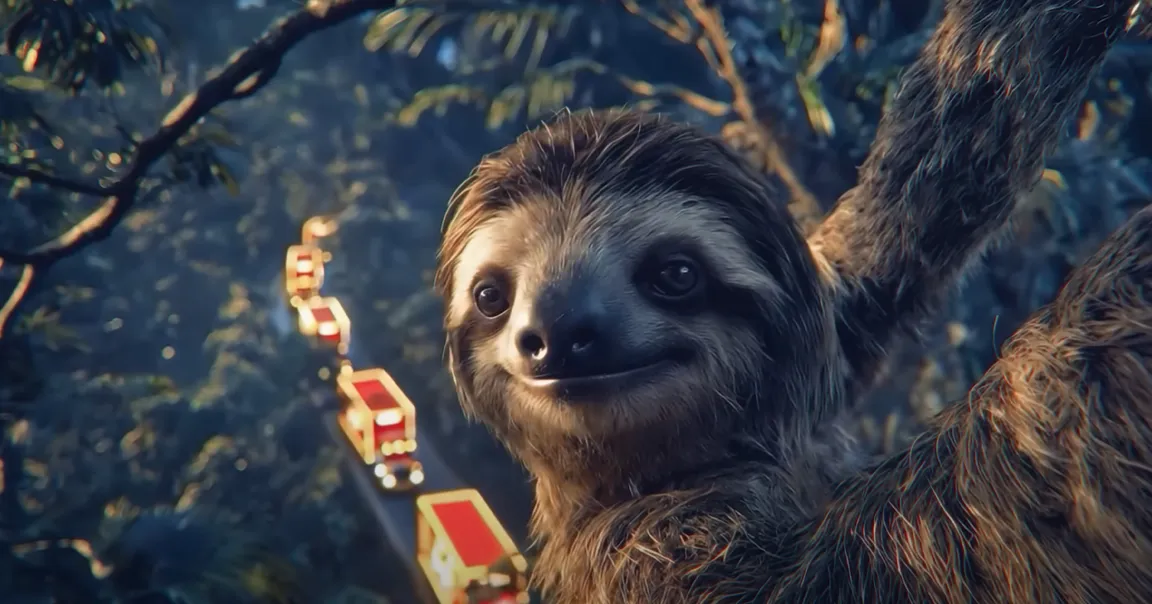
In this first ad, the commercial starts off in Santa’s house. Santa plays with a toy Coca-Cola car that turns into a full truck. Then continuity is thrown out the window. In a commercial running only 60 seconds, there are 16 different locations and 23 different shots of things that lack any connection. We jump from polar bears to penguins to porcupines to pandas to seals to puppies, and there are more animals that I decided not to mention for your sanity and mine. Even the clips of traveling Coca-Cola trucks spliced throughout the commercial, are inconsistent. If you have a good eye for detail, you will notice they are shaped differently every time they are shown. My personal “favorite” part of the commercial is at the end, where it appears that the Coca-Cola trucks ran over a few people off screen.
The second ad is much more overwhelming than the first (Coca-Cola is excellent at stretching the limits of what is possible). In a 78 second commercial, there are 40 different locations and 52 shots, with the shortest shot being 0.44 seconds and quite a few of them being under 1 second. This ad was an “around the world” showcase of the reach of the Coca-Cola trucks. By “around the world”, of course I mean the sloppy versions of cities well known to westerners: Tokyo, Amsterdam, San Francisco, and so on. The idea of Coca-Cola trucks traveling the globe to spread Christmas cheer sounds like a nice, wholesome ad, but they botched the execution. Just like the first commercial, this ad faces the problem with cohesion, featuring so many animals that I’m convinced Coca-Cola wants to make an AI zoo. Quite tragically, humans are a part of the zoo. We got a look of a nightmare-inducing Santa Claus. I bet the company was patting themselves on the back because he has five fingers. What an accomplishment!
There is a simple reason as to why both ads are so jumbled: everything from the trees to the trucks to the snow to the animals (especially the animals) is extremely uncanny to look at. Pause at any part of either ad, and you will see what I mean. To accommodate AI’s limitations, Coca-Cola decided to use a bunch of fast shots and disconnected images. AI is poor with replication, so you often see characters once in the ads that never show up again. Both ads are plagued by a severe lack of soul, which makes them feel very hollow. This isn’t advertising. What you see are two video collections of no-effort generated images, sprinkled with a bit of motion and background music (and I am beginning to question the usage of real singers) to classify it as a commercial.
To make things even worse, this year Coca-Cola had the audacity to release two “behind the scenes” videos. Behind the scenes of what? Going into ChatGPT (or “Real Magic AI” as they call it) and putting in a prompt for a basic Christmas ad? Do we really need to see the thought process behind a marketing team with the IQ of a vegetable? Clearly a vegetable was generous, because I highly suspect an AI voiceover was used in one of these videos. In the other, there was definitely an AI voiceover. The insight was dull and brainless, and the “commentators” had voices so monotone that a newscaster reporting on paint drying would beat them in emotional range.
Coca-Cola tried their darndest in these videos to make themselves look like the good guy. They took real news clips from 2024 and acted like they were positive reinforcement, when in reality, they were discussing public criticism. They acted as if making “post production the new pre-production” was a justification in using AI. Not that the extra time did them any good. Was cost-saving really worth it when the ads look that terrible? But oh, I must be mistaken. According to Coca-Cola, so much effort was put into the ad. It took a great deal of thought to decide on “super expressive hyperrealism” for the advertisement style. And look! Coca-Cola showed us the physically drawn concept art of the AI characters…which was almost certainly AI generated itself. The company claims they are “combining human creativity with AI to turbo-charge expression and imagination, giving creatives more freedom, speed, and control than ever before”. This is so blind to reality that I had to laugh. Clearly they only care about speed. There is no freedom or control when AI does all the work. If they wanted to make something with artistic passion, they would’ve hired real animators. The fact that it only took 100 people to make this commercial is not a flex; it’s an insult to how far creativity has fallen.
Of course, at the end of the day, should I really be so surprised? This is Coca-Cola we are talking about. The company is not exactly known for its ethical practices. From taking water from local farmers to pollution to animal testing to hiding adverse health effects, it seems that firing artists in favor of lazy, cheap ads is just another item to add to the list of controversies. But that doesn’t make the commercials any less disappointing. With well over $40B of yearly revenue, the company certainly has the resources to do better. I never thought that a proper ad from a company that betrays morality for money would be too much to ask for, but here we are. Regarding the AI characters, the company said (with one of their AI voices of course) that “their joy mirrors the audience’s joy”. Then I suppose these AI eldritch abominations must be some miserable, frustrated people.
I’ve never been more motivated to drink a Pepsi in my life.
