















Check out more of The Viking Vibe’s coverage of Grease:
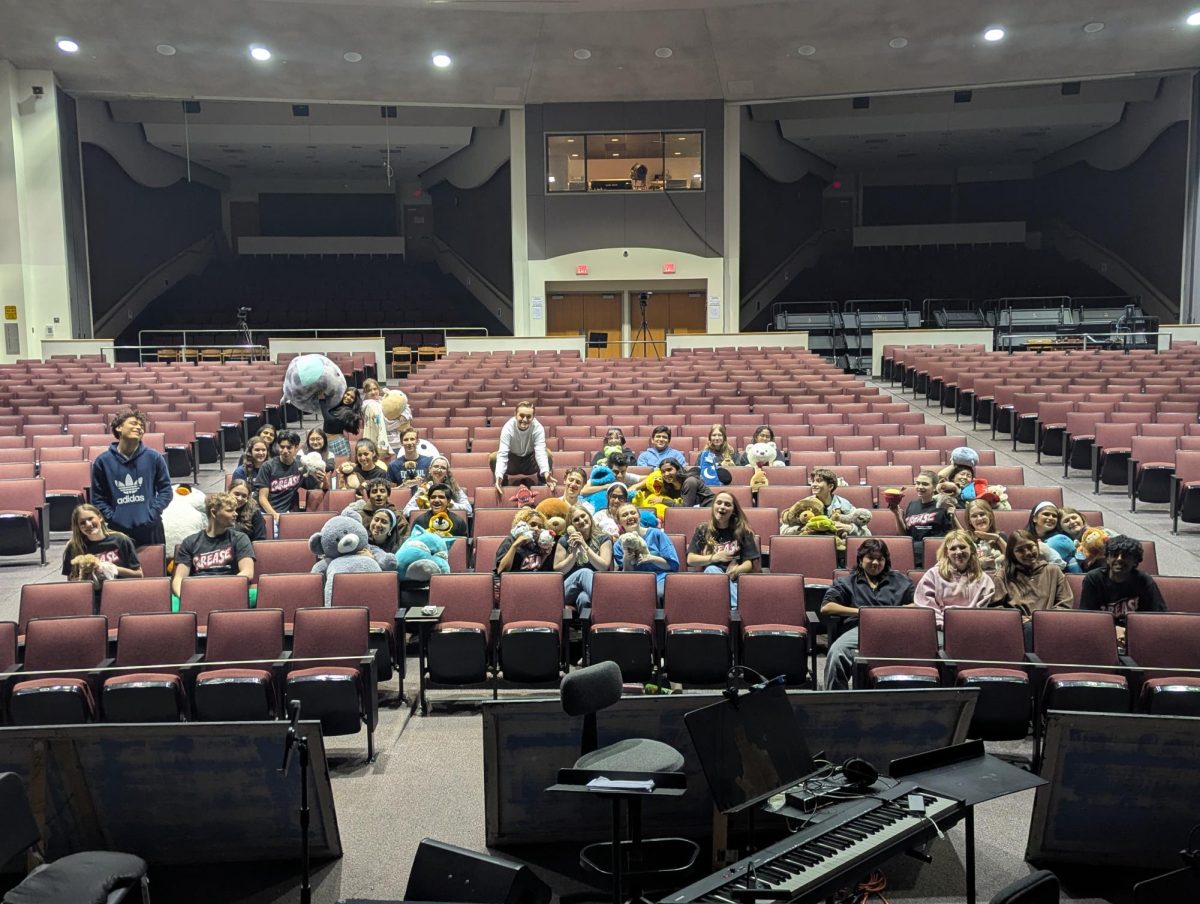
As anyone involved in SBHS’s Pirandello Players drama club would know, time management is the most valuable skill to learn. From figuring out when to quick-change or hydrate between scenes, to calculating math homework and writing articles in full hair and makeup before we run the show that day, there is no second to spare during tech week. In preparation for the production of Grease on April 30, May 1, and May 2, the Players take us through their schedule in a look behind the curtain.
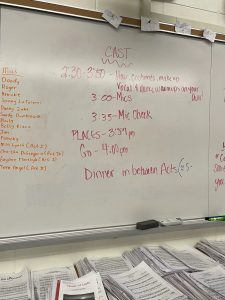
Starting in February, the Pirandello Players have been rehearsing every day after school. At 2:45 PM sharp (although sometimes not so sharp), the Players alternate between learning their choreography with Ms. Jordyn Sava, an alumnus of the program, and the music for their production with Co-Director Mr. Aldo Aranzulla. While rehearsals in the first few months end at 5 PM, they begin to inch later and later until 10 PM during tech week.
In the theater world, the week before the production is called tech week, often casually referred to as “hell week” – not because the cast and crew don’t love their production, but because of how stressful it can be. On top of the already rigorous courses SBHS encourages, singing, dancing, and acting your heart out on stage can be difficult to do for over 30 hours a week.
An unfortunate Pirandello tradition is that some sort of sickness circulates through the entire cast and crew, with the title of “patient zero” being awarded to whoever was the first to fall ill and supposedly spread their germs around, as everyone’s immune systems are weakened. This is due to not taking care of ourselves, from lack of sleep to not eating properly. Theater Director Mrs. Jillian Trader advises us on how to stay as healthy as possible, encouraging everyone to eat lots of vitamin C and get home to get some rest after intense rehearsals.
Before the chaos of 2:45 PM and beyond, the dressing rooms are a relatively calm place. Situated in the hallway between D104 and D105, the choir and band rooms respectively, their almost-soundproof practice rooms transform into our changing spaces with the pull of a curtain over the transparent door. Amanda Monkowski (‘27) who plays Patty Simcox often takes power-naps in the dressing room, turning the lights off and pulling up her hoodie. “For me, a 30 minute nap is the perfect length to feel energized without feeling like I just woke up from hibernation. It gives me the boost I need for my super energetic cheerleader role” said Monkowski.
Then, the dressing rooms become an organized mess of hair, makeup, and costumes. With garment bags bulging with clothes from upper railings around the small rooms and instruments, chairs, and mirrors (a dwindling supply as a few have broken this season) all crowding the space, fitting eight girls into a room is a challenge. “Everyone made their own little areas in the dressing room, and we all try our best to respect those spaces,” said Anna Guntherz (‘29), an ensemble member in her first Pirandello musical. “In such a small dressing room, we have to keep it very clean. It sounds cliche, but being there with all of my friends is really fun, and it has helped me grow closer to some of the people in the cast I don’t have classes with or see outside of theater.” Each cast member creates their own designated sliver of the room, filling it with comfort like blankets and their more practical bags for makeup and hair products. Ensemble member Asha Vora (‘27) even brought a speaker for their dressing room, with the girls either jumping around to super upbeat songs and music from previous Pirandello musicals, or silently focusing on setting their makeup with calming playlists in the background, depending on the day and their energy levels.
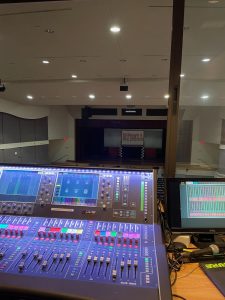
Mic check, usually about 25 minutes before the run of the show starts, is crucial to making sure all characters are projecting enough and can be heard throughout the spacious auditorium. After the crew secures their microphone with a velcro belt and three pieces of medical tape, cast members need to cover the visible tape squares with foundation to blend into their skin before lining up single-file on stage. One at a time, each character performs one of their longer lines of the show, just like they would during the performance. Sound technicians Maia Marcelo (‘26) and Shashank Manicka (‘27) set the levels accordingly, controlling the amplitudes and frequencies of the sound waves on the lit-up sound board. They have the difficult task of managing twelve body mics at a time, plus the “god” mics, or traditional hand-held microphones, across the entire two-hour-long production. However, their work goes beyond the booth of sound boards above the auditorium seats. “Before our run, it’s typically one of the booth people’s jobs to do the attendance form, see who’s here, see who’s not, and check up on everyone to see who’s not feeling well,” said Manicka. “If for some reason someone can’t act, sing, or dance that day, it’s our job to find out. That’s something a lot of people forget.” Mics were started on Tuesday of tech week, giving booth only seven days before opening night to perfect their timings and levels to reduce feedback. The microphones “popping,” or in other words picking up sounds from the speakers causing enough feedback to prevent the normal function of the mic, has been an increasing issue with aging equipment. Along with the monitors set up in the pit, the small live orchestra that plays the entire musical score in front of the stage, mic check needs to be precise to mitigate any feedback in the sound system.
Arguably the most important part of the entire process of creating a musical is the notes. They make sure every Player is always improving after every run, from big things like skipping lines or forgetting a prop, to small sound effect changes and pinning dresses and crinolines differently. All of the directors, as well as stage manager Em Weisner and the three student assistants to the director all take notes on the same document, having the most eyes possible catch different small things to enhance the show. As soon as the lights go out on our final poses (or, we finish learning from the rehearsal before opening night, a continued Pirandello superstition), all cast members run off the stage to get out of mics and costumes. The backstage crew takes this time to reset all of the props, marked out on specific tables with masking tape. An overwhelming majority of them are freshmen this year, the next generation of crew figuring out how to delegate taking couches, vanities, and cars called “Greased Lightning” in and out of the stage.
To round out tech week, the infamous cue-to-cue is held from 10 AM to 5 PM on Saturday, April 25. This is time for our lighting director, Ms. Jennifer Moffet, and student lighting technicians Em Weisner (‘26) and Hannah Virtudazo (‘27) to program all of the lights for the entire production. Dressed in our comfiest clothes, cast stands on stage in certain parts of our blocking, or movement on the stage, whether that be stage right or left, up or down, and any entrances and exits that happen in a particular scene. Before cue-to-cue, the electrical sections of lights need to be brought down. Virtudazo explained, “When you bring down electricals, you have to use the chains and the weights to bring down these huge heavy beams, and the issue is that whoever installed the projector on the stage wired over the electrics, so there’s wires literally over what we need to bring down. So, that was a challenge we had to overcome when planning how to use the projector with the lights for the opening reunion scene with the yearbook.” Only three rehearsal days before the show, the lighting crew was programming away to really bring the show together, highlighting impactful moments in the script and music through the changes in lights or a specific spotlight.
The work put into this production is undeniable, and they hope to see packed audiences for their four performances this weekend!