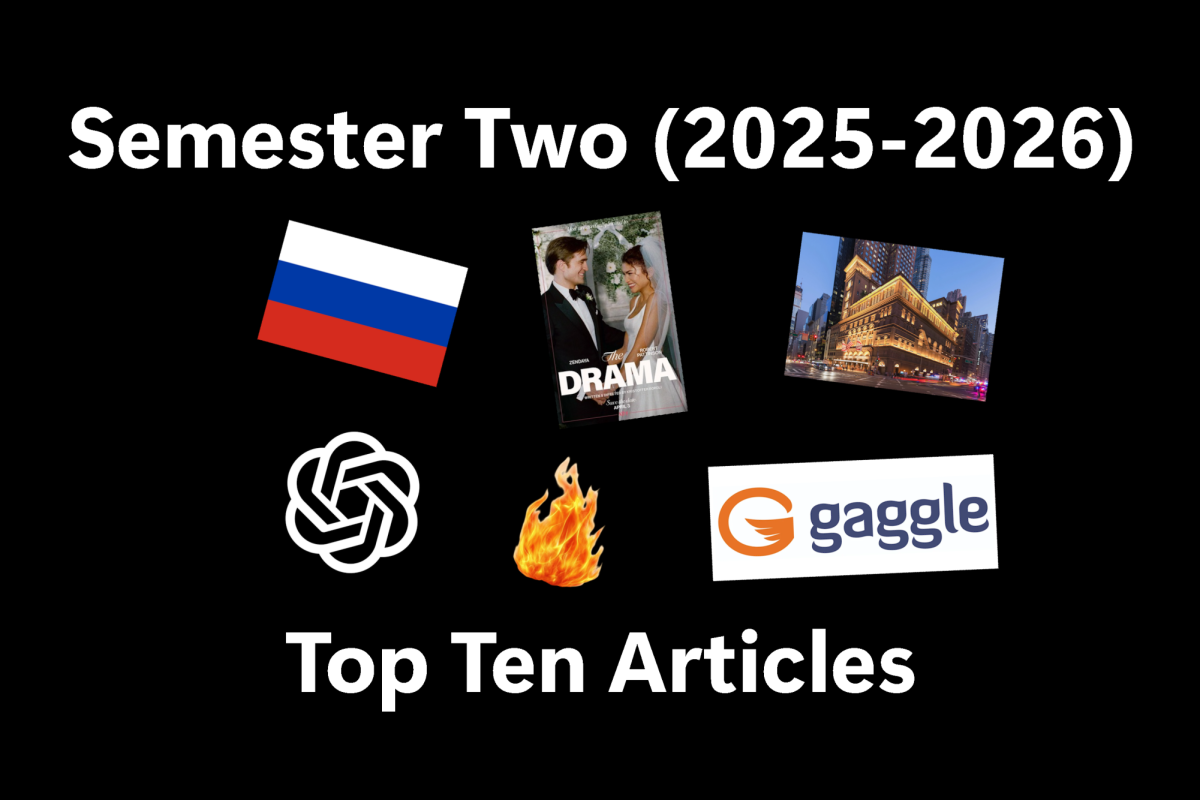











I got the chance to see The Drama on the Thursday before its release date, April 3, 2026. Despite being so close to the screen I was almost crushed by Robert Pattinson’s jawline, I quickly found the film to be one of the most intriguing and enjoyable recent releases. I was lucky enough not to have heard the big twist that serves as the film’s inciting incident (which I will be writing about here) prior to watching the film, only knowing as much as the trailers permitted. That being said, this film was not nearly what I expected it to be.
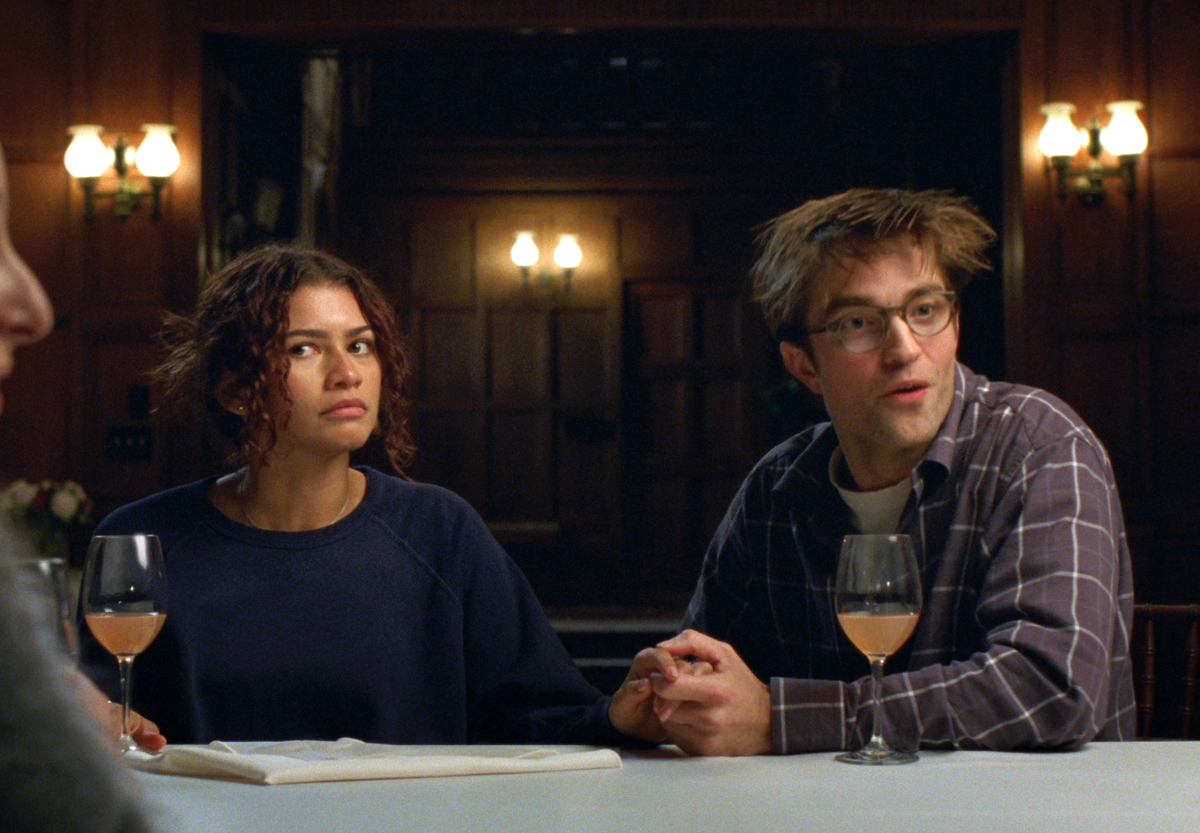
The film follows Pattinson and Zendaya’s characters, Charlie and Emma, as they prepare for their wedding. Their relationship is at first recounted through both characters’ wedding speech writing processes, during which their maid of honor and best man advise them and help them navigate their memories. Their romantic first meeting reveals that Emma is deaf in her right ear, which leads to Charlie having to “start over” and approach her a second time. As we skip back forward in time to the weeks leading up to the wedding, Charlie and Emma see their wedding DJ doing heroin with friends on the street. Unsure how to react, the couple discusses possible options with their maid of honor and best man, who are a couple themselves, at dinner.
As the four get increasingly drunk, the conversation leads to the group discussing the worst things they’ve ever done. The best man, Mike (Mamodou Athie), admits to using his ex-girlfriend as a human shield to hide from a stray dog. Charlie claims to have cyberbullied a classmate at 14. However, the most interesting “worst things” are those of the maid of honor, Rachel (Alana Haim), and Emma herself.
Rachel claims to have locked a mentally disabled child in a closet at a young age, leaving him there overnight and lying when asked of his whereabouts. With the group laughing and brushing off the severity of the situation, an intoxicated Emma chimes in with her “worst thing,” that being her planning a mass shooting at her high school, but never going through with it. Charlie, who has never heard of this before, laughs and assumes it to be a strange joke. Emma adds that she lost her hearing in her ear practicing in the woods for the shooting to further confirm her statement. Rachel, however, mentions her cousin who was left paralyzed from a shooting and quickly gets upset with Emma, bringing the dinner to an end.
The rest of the film consists of awkward conversations between the couple, flashbacks to Emma’s childhood and uncomfortable imaginary situations in Charlie’s head, and the slow unraveling of the situation at the wedding. Knowing about a resurfaced essay written by the director, certain shots of Charlie imagining Emma as her younger self felt uncomfortably recontextualized, but were quickly moved past regardless. I most enjoyed the comedy of the film, like their meeting with the photographer who describes how she plans on “shooting” the couple and their families at the wedding, but I was intrigued by the moral debate of the film itself.
Of course, the film does take an anti-mass-shooting stance. The real interest in the moral justification of Emma’s actions comes from seeing through Charlie’s perspective as he tries to reason with why she would go so far as to plan a shooting, the issue there being that there is no moral justification for her actions apart from her being called names in the halls. The truth, which Emma goes on to reveal, is that the pervasive culture and aesthetic built around shootings intrigued her, especially not having very many friends at school. She also adds that her being a girl would have brought her more attention, which seems to be the goal of many shooters: simply becoming a part of the glorified aesthetic of mass shooters who claim to be upset with the world but mainly just want attention. Then again, the question arises if a 15-year-old Emma is to blame for her intrusive thoughts left alone too long or if the culture should be blamed for the way it frames shooters to children online.
As a high school student at a very safe school, it may be hard for me to detach myself from seeing school shootings as a common occurrence in the country that causes us to have to sit with the lights off for a few minutes every few months. For that reason, I do want to recognize the severity of mass shootings, and in no way do I mean to condone them. Although the film uses the situation for awkward comedy moments, it is clear that The Drama is smart with how it frames young Emma. Rather than having her be mysterious or giving her a sad backstory for some kind of “justification,” we simply see her as an impressionable child with a lack of friends and really nothing better to do. This is most evident in the scene where she attempts to film a kind of manifesto video, but keeps getting interrupted by computer updates and glitches. The Drama frames shooters exactly as they should be framed in media: impressionable and uneducated children. They should not be glorified or somehow justified, but also should not be reduced to their race, gender, or to their background. The fact that Emma’s character didn’t go through with the shooting because she happened to be suddenly valued by her peers as a voice against gun-violence proves that mass shooters do not believe in what they seem to stand for, and most often are just lonely and inspired by past shooters.
From a filmmaking perspective, I particularly enjoyed how The Drama was shot. It felt very similar to director Kristoffer Borgli’s previous film Dream Scenario (2023), which I still owe a rewatch. I do think The Drama structurally holds up much better than Dream Scenario, but of course Nicolas Cage is so great in the latter that it almost doesn’t matter. Borgli seems to have a talent for tonally adjusting the film in the most perfectly awkward way. I also enjoyed the use of quick cuts between normal Emma and Emma alongside firearm imagery, especially her in the poster holding out all her fingers contrasted with her only holding out her thumb, index, and middle fingers to create a gun shape.
Another particularly interesting aspect of the film was the dynamic between Rachel and Charlie. Rachel quickly turns on the couple as it becomes clear that Charlie has no plans to leave his fiancée over her actions at fifteen. Even her speech as the maid of honor calls out Charlie for being so accepting of Emma’s past actions. Yet many have pointed out that Rachel herself got closer to killing an individual than Emma ever did, as Charlie points out to her. In fact, everyone at the dinner table seemed to be able to brush off their wrongdoings apart from Emma, who was held accountable for her actions throughout the entire film.
As funny as this film can be, it deals with intense topics in awkward situations and conversations. Still, the film’s ending is sweet, calling back to the first time the couple met by having them try to start over as if they were just meeting, despite the disaster that previously occurred at their wedding. The Drama is a film heavily carried by its two leads, with Zendaya especially giving what I would consider one of the best performances in her career. Pattinson and Zendaya also seemed to attract major viewership to the film, as the film only took 48 hours to make back its $28 million budget. The Drama serves as a reminder not only how far starpower can take a film, but also how a great concept and story should be valued over flashy visuals and production value to truly sell a film.