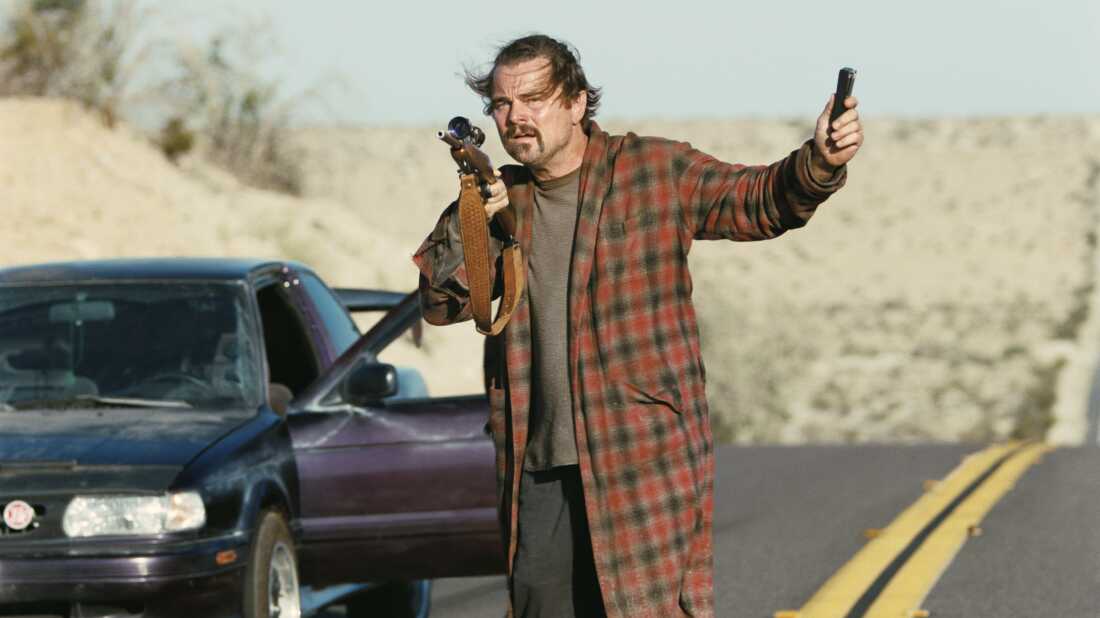



















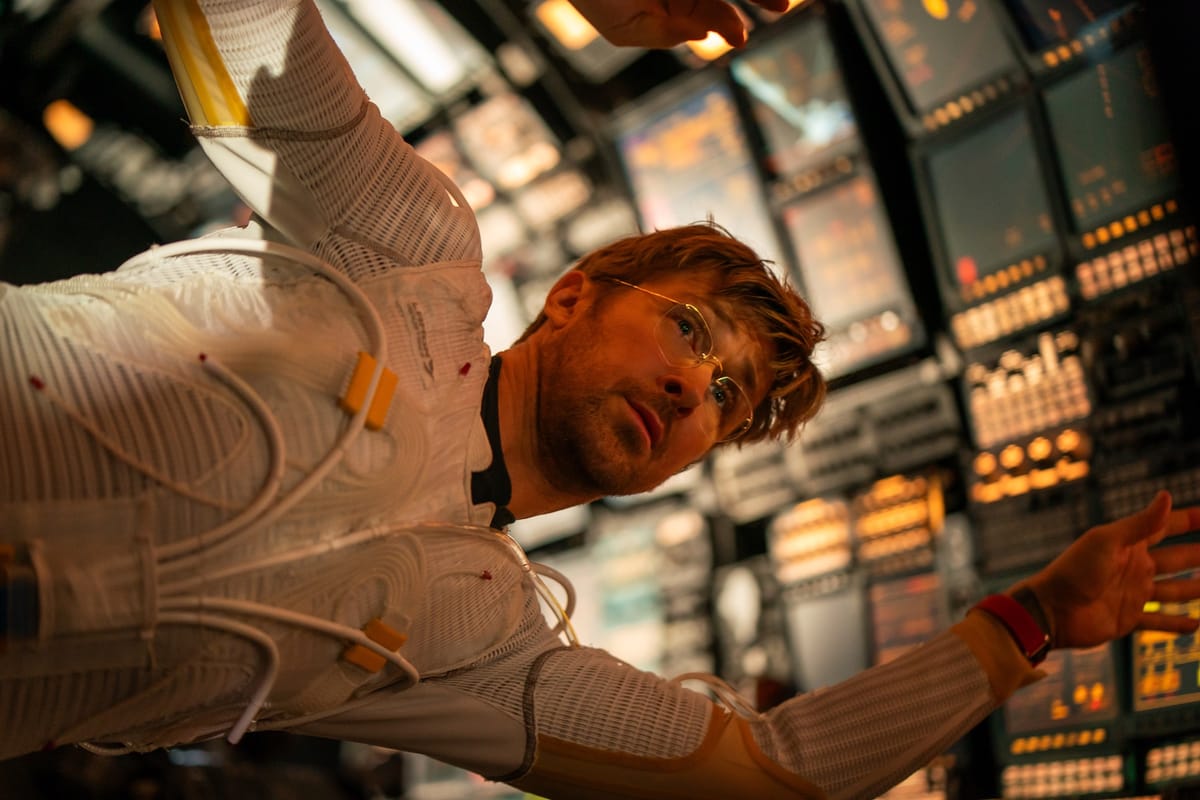
Following the extreme commercial and critical successes of their previous works, including Cloudy With a Chance of Meatballs (2009), 21 Jump Street (2012), 22 Jump Street (2014), and The Lego Movie (2014), director duo Christopher Miller and Phil Lord have once again outdone themselves with their most recent release, Project Hail Mary, released on March 20, 2026. Based on Andy Weir’s novel of the same title, Project Hail Mary follows the story of science teacher Ryland Grace, played by Ryan Gosling, being sent out to space as a last-resort to study the protective factors against a harmful bacteria that seems to be eating the sun. On his journey, Grace runs into Rocky, an alien from planet Erid who has arrived with the same goal. Together, the unlikely duo form an unbreakable friendship and work together to save each others’ home planets.
In this new era of Ryan Gosling comedy movies like Barbie (2023) or The Fall Guy (2024), we haven’t seen much of his dramatic acting in recent years. Luckily, thanks to Project Hail Mary, we were given a good balance of comedic and dramatic acting on Gosling’s part. For a story that relies heavily on his acting abilities, Gosling delivered a very compelling performance in this film, especially considering his task of selling his friendship with a CGI-rock-alien-creature. In particular, the scene where Rocky tells Grace that he can help him return home despite Grace believing he was giving his life for the mission was one of the most emotionally sensitive moments in the film, which would not have been possible without Gosling’s performance.
Apart from having an inspirational and heartwarming story, Project Hail Mary is visually stunning, exceeding the already high expectations that one would expect from a big-budget space movie. A few shots in the film that one would expect to be filmed using a green screen actually used in-camera light techniques to capture amazing visuals that solidify this film as having great cinematography.
What I find most interesting about Project Hail Mary is the general agreement between the harshest of critics and the most easily-satisfied audiences. This should come as no surprise considering the reactions to past Lord and Miller films, but it does feel similar to the general hopeful feeling that swept audiences following the release of Superman (2025). Typically films are a battleground between critics and audiences. Either critics praise a film that general audiences don’t even see or don’t understand, or audiences enjoy a film that critics see unfavorably due to its simplicity. Seemingly, Lord and Miller have found a perfect balance in which they put the proper care into their film while also maximizing entertainment value for all audiences.
My one critique of Project Hail Mary would have to be its fast pacing in the first act. Due to the film’s non-linear storytelling, the “first act” as I refer to it includes all scenes where Grace is on Earth prior to his journey. I understand that a big part of Grace’s character is his inability to connect with his own species as he does with Rocky, and I see why they would cut from the Earth scenes for runtime reasons. Still, I would have enjoyed seeing exactly why Grace finds it so hard to bond with humans. We do get to hear Grace say later in the film that things between him and his partner did not work out, yet that isn’t at all referenced during his scenes on Earth. For the same reason, I did enjoy the scene where Sandra Hüller’s character Eva Stratt sings Harry Styles’ “Sign of the Times” during a karaoke party. Not only did the moment give a sense of humanity to an otherwise flat character, but it felt like the pacing had a moment to breathe in terms of Earth scenes. The song choice was another great part of the film for a number of reasons: 1.) The song feels like that moment of holding your breath before a climactic moment, like stepping across the stage at your graduation or, more thematically, an astronaut about to exit the atmosphere, and 2.) The orchestral version of the song used in the trailer gives such great magnitude to the situation, reminding us that the fate of both planet Earth and planet Erid relies on the friendship between Grace and Rocky.
It’s hard to say exactly what makes Project Hail Mary resonate with so many audiences. Aside from the general appeal of space movies and the charm of Ryan Gosling with Rocky on screen, the film is clearly a very condensed version of the book, which is evident through its rapid pacing in the first act. Andy Weir’s novel contains extensive scientific terminology that, when condensed, could very easily turn people away. That being said, the film is great at distilling science fiction in a way that lets all audiences easily understand what’s going on in relation to the plot. A hopeful part of me also wonders if the scientific aspects of the film are what draw people in, since science is a universal language and, when presented properly, can be really interesting to learn. Even in our current reality, the launch of the Artemis II spacecraft has brought unification between political parties through the wonders of science and space.
If you haven’t already seen Project Hail Mary, I encourage you to gather your friends and go see it together. The community experience of watching a great film in a theater is an underrated aspect of film-watching that I particularly enjoy when audience-pleasing films that are also just generally good movies are released.