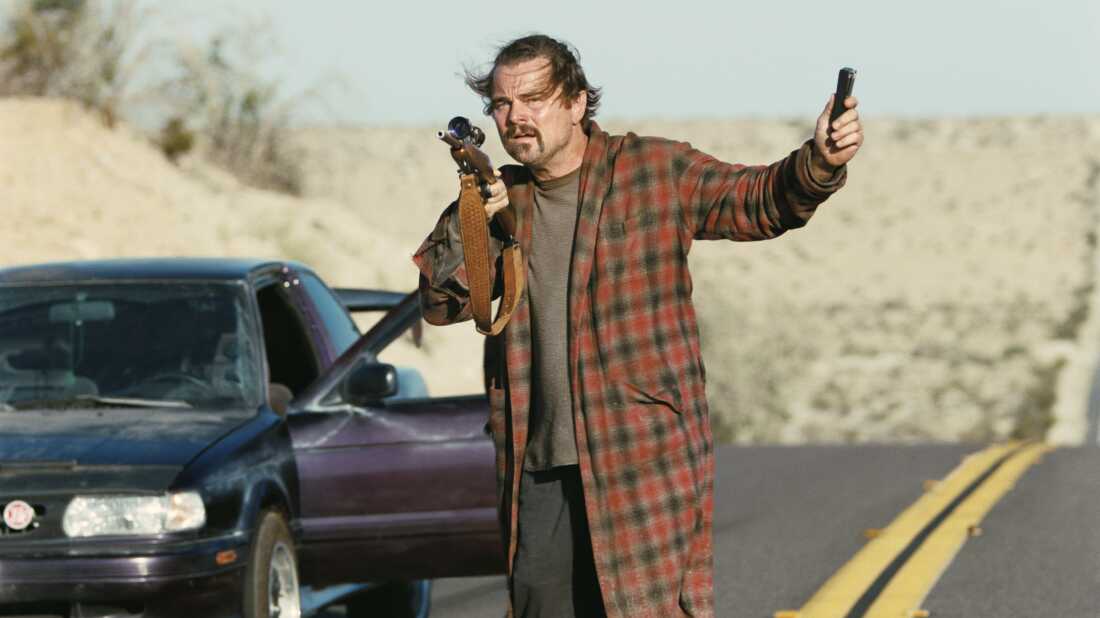



















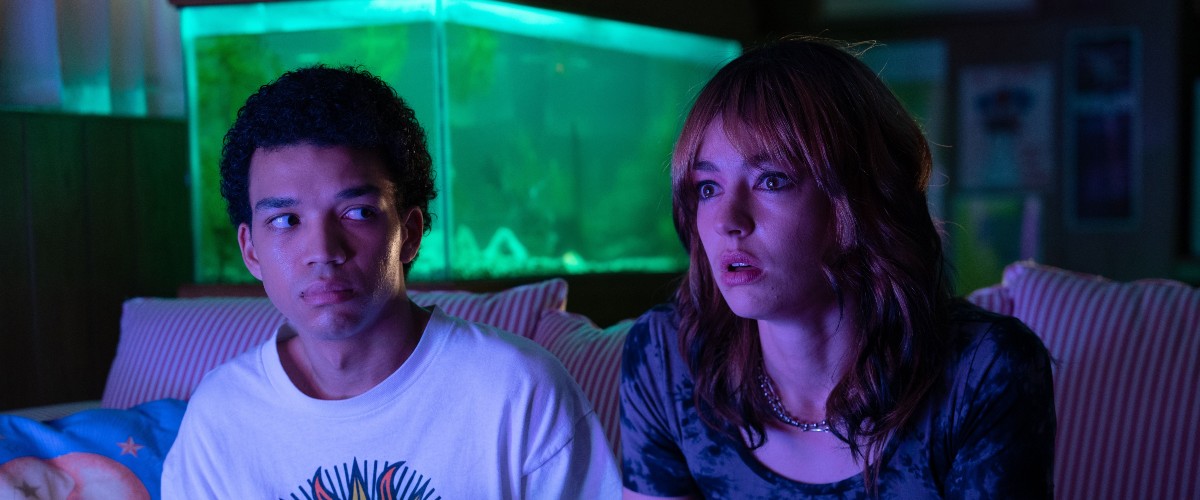
Art is meant to comfort the disturbed and disturb the comfortable, and no film has truly embodied this idea as well as I Saw the TV Glow (2024), written and directed by Jane Schoenbrun. The surrealist film stars Justice Smith as Owen, known for Now You See Me: Now You Don’t and Jurassic World: Fallen Kingdom, and Jack Haven as Maddy Wilson, known for their role in Atypical. This psychological-horror style film centers around the two respective teenagers as they explore their identities and question their reality through their connection to their favorite TV show, The Pink Opaque, a fictional series within the movie.
The movie is unlike anything I have ever seen, and unsettling in the best possible ways. The story revolves around Owen, a teenager in the late 90s, and his new friend Maddy, who introduces him to The Pink Opaque, a “Buffy”-esque show about monster-fighting teenage girls named Isabel and Tara, who use a psychic connection to fight the supervillain. The show serves as an adolescent escape for them. But a decade later, Maddy has gone missing, the show has been canceled, and Owen lives with his father and works at the local movie theater after his mother’s death.
One night, ten years later, Maddy returns and encourages Owen to rewatch the finale of the series, where the main characters are imprisoned in a pocket dimension (called the Midnight Realm) and buried alive, explaining to him that someone buried her alive so she could wake up in the Midnight Realm as her true self: Tara. The show serves as a manifestation of Owen’s true identity, one that he suffocates, and after pushing away Maddy’s attempt to bury Owen alive, too, he never sees her again.
One of the most fascinating things about the movie is Schoenbrun’s approach to horror. Instead of using jumpscares and gore, Schoenbrun employs one of the best aspects the film has to offer: the dread of existentialism. Using the nostalgia of adolescence in the 90s and suburban monotony, the film genuisly uses dissociation to build the terror of Owen’s life, one that he seems to be living half-asleep and in denial. The denial and dissociation tie back into the film’s themes of being trapped in the wrong life, an allegory for being transgender, literally suffocating in inauthenticity. There’s a scene where an older Owen watches the show again, and sees it as poorly written and acted, refusing to let it influence how he navigates his life.
The final scene is a tragic depiction of those who never let their own TV glow, those who push down the scary unknown instead of embracing it and stay in the familiarity of their lives, no matter how prison-like it is. As Owen suffers a breakdown at work in the middle of a child’s birthday party, he screams for help, saying that he is dying. After escaping to the bathroom, he cuts open his chest and sees the TV glow inside of him, but once again returns to work, refusing to really embrace what it means for him.
The film is, surprisingly, not cathartic, leaving viewers feeling heavy when Owen doesn’t get a happy ending and is left to continue struggling under the weight of the choices that led him there. The movie is difficult and disturbing, mainly because the horror doesn’t lie in something external, like Mr. Melancholy of The Pink Opaque, but rather within something inescapable: yourself.
I Saw the TV Glow is a beautiful film, and brilliant in its originality, leaving no room for passive viewing. The film’s use of existentialism leaves viewers wanting to do something, as it forces you to grapple with the idea that maybe you’ve been a version of Owen all along—stop watching life happen, and go live it instead.