
















When I first had a friend ask to join me in seeing Josh Safdie’s Marty Supreme (2025), I’ll admit I was slightly surprised. Of course, I wouldn’t say that the Safdie brothers are some kind of underground directors, but it’s safe to say that I’m typically the one asking my friends to watch Safdie-like movies. After the first offer came another. Then a trip to see the movie was being discussed in a groupchat. Then, promotional material for Marty Supreme appeared across my social media feeds.
It seemed that Marty Supreme’s marketing team was being very strategic in their approach. The clearest indication of this was the eighteen-minute video released to distribution company A24’s YouTube channel, aptly titled “Timothee_Chalamet_internal_brand_marketing_meeting_MartySupreme_11.08.2025.mp4”. The video consists of Marty Supreme’s marketing team holding a satirical Zoom meeting call with the lead actor of Marty Supreme, Timothée Chalamet. Poking fun at the structure of typical virtual work meetings, the video consists of Chalamet consistently pitching increasingly extravagant publicity stunts to promote Marty Supreme while the marketing team silently nod their heads.
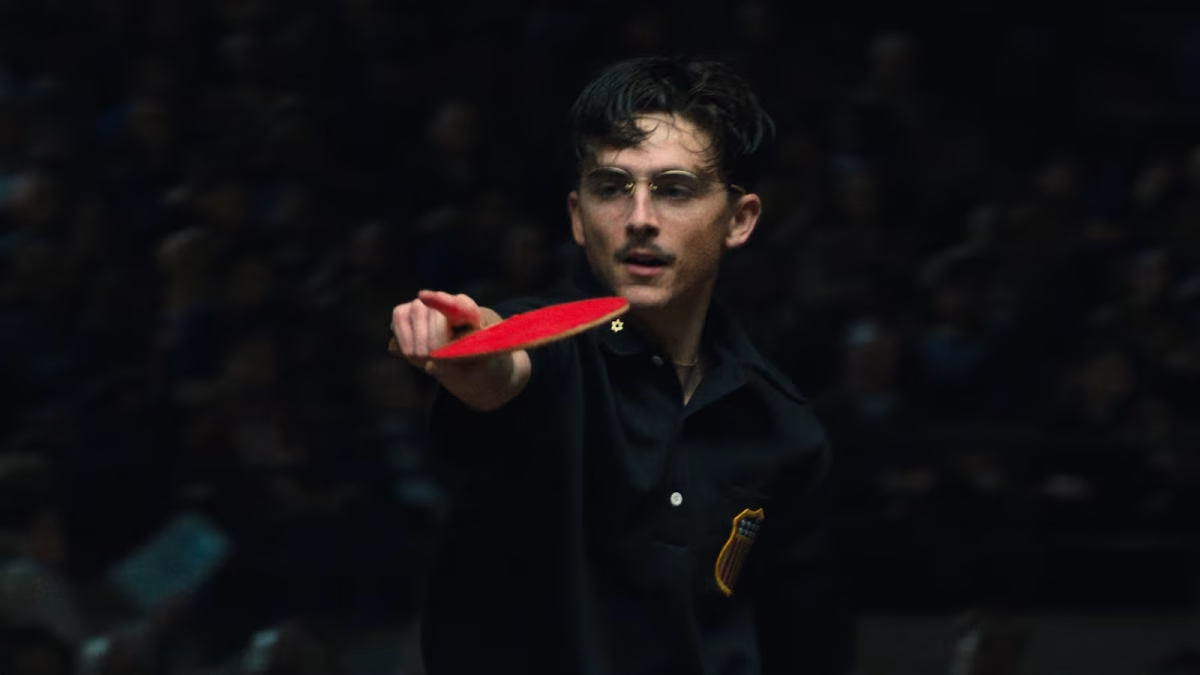
The film, which follows the story of 1950s table tennis player Marty Mauser (loosely based on real-life table tennis player Marty Reisman) and the extreme measures he takes to get to Japan for a global tournament, arguably has very little IP for marketing to turn into plush toys and coffee mugs. As a result, in the marketing video, Chalamet pitches the association of the color orange, specifically “corroded orange,” with Marty Supreme, as a reference to a moment in the film where Mauser pitches that tournaments use orange ping-pong balls as opposed to white for better visibility. The staged video call results in Chalamet pitching increasingly impossible ideas, such as painting landmarks like the Statue of Liberty the corroded orange color, and dropping thousands of orange ping-pong balls, each with the film’s title on it, from a blimp.
After seeing this video, it quickly became clear as to how the Marty Supreme trend began across social media. With young users being given vague phrases to reference, social spaces began to fill with inside jokes from the video that only certain people had seen. A notable phrase from the video was “Marty Supreme Christmas Day,” simply listing the film’s title and release date. With platforms like TikTok pulling in such large numbers each day, young users often feel cooler and more elevated when they feel that they exist within the minority, or when they are more knowledgeable about niche topics. Marty Supreme’s marketing soon began to take off, and with the jokes from the video spreading across platforms, the team took its next major step.
With Marty Supreme established as something cool and stylish for young people, the marketing team leaned into this positive image with the release of a stylish Marty Supreme jacket. Yet, instead of releasing it to the public, the jacket was originally only released to popular celebrities, including Tom Brady, Frank Ocean, Hailey Bieber, Kid Cudi, Kendall and Kylie Jenner, Bill Nye, and Susan Boyle. This was a smart move, as it not only encouraged people to see the film, but it incentivized them to talk about it, and to constantly keep their eyes on Marty Supreme while they waited for the jacket’s release. Closer to the release date, some theaters began selling the Marty Supreme ping-pong balls in small gumball machines as well.
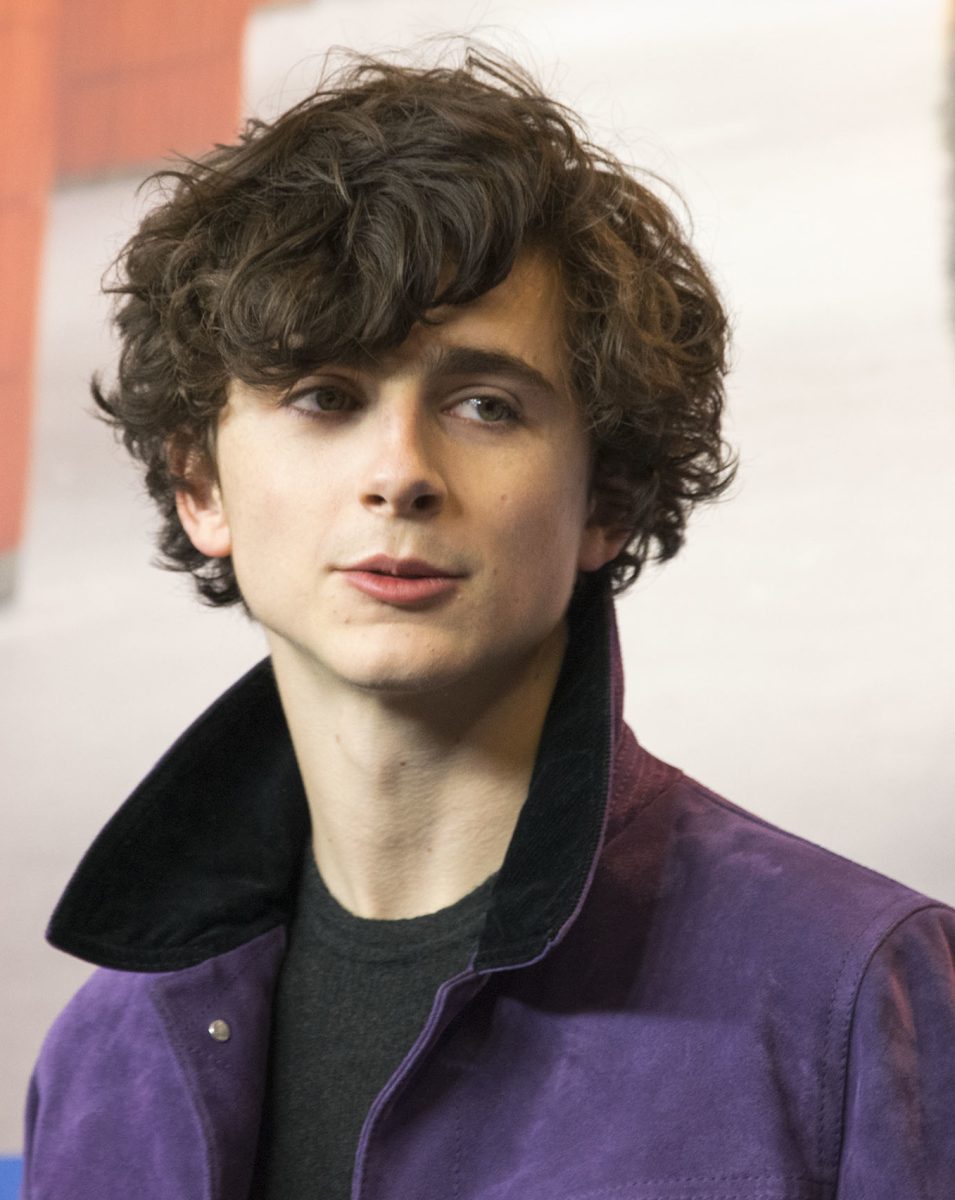
What especially helped Marty Supreme’s marketing was the starpower of the cast. With several first-time feature film actors who are otherwise extremely popular in other fields, such as musician Tyler, the Creator, and Shark Tank’s Kevin O’Leary, diverse audiences were drawn to the film immediately. The film also starred Odessa A’Zion and Gwyneth Paltrow, who had taken a break from major roles before Marty Supreme. Of course, leading man Timothée Chalamet, an already popular actor, also had a major influence on the marketing of this film. With the film releasing so close to awards season, Chalamet opted to change his manner in public appearances. As opposed to his more aesthetic and artsy appearance in Luca Guadagnino’s Call Me by Your Name (2017), Chalamet presented himself as a hustler who is willing to do anything to achieve his goals, similar to the mindset of his character Marty Mauser. A clip was also released of Chalamet on top of the Las Vegas sphere, promoting the film as the sphere lit up with the film’s title on it.
Marty Supreme opened at the worldwide box office extremely successfully, taking the sixth spot for the highest-grossing A24 film, just under films like Hereditary (2018) and Everything Everywhere All At Once (2021). The marketing truly paid off in the end for this film, and the film became critically acclaimed in many ways as well.
I knew of Marty Supreme far before it began to trend, and I say that not to boast, but to show that the stakes of this film were much higher for me. A friend of a friend of mine worked for both Josh and Benny Safdie, the director duo behind films like Uncut Gems (2019) and Good Time (2017), who claimed that the Safdie brothers were nervous about their “director breakup,” so to speak. With Benny Safdie opting to direct The Smashing Machine (2025)—a wrestling movie with Dwayne Johnson and Emily Blunt—Josh Safdie’s interests diverged from his brother’s, causing a peaceful split between the directing duo. Not wanting to follow in the footsteps of other famous sibling directors who split off to direct alone—most notably the Coen brothers—resulting in a slow decline in film ratings, the stakes were high for the Safdies.
I saw The Smashing Machine in theaters, and I’ll admit it was still enjoyable to watch. Benny Safdie definitely has a strong sense of style in his direction, and of course, he helped Dwayne Johnson deliver a truly compelling performance. Yet, I felt like the film was missing a particular narrative element, which worried me that the Safdie director split would result in certain elements missing from each of their films.
Luckily, Marty Supreme proved that notion wrong. Granted, Josh Safdie relied heavily on what worked in previous Safdie brothers’ films, and some small aesthetic elements, like the opening credit font, could have been slightly better. Still, Marty Supreme was extremely immersive. I loved that the film stuck to the stressful and anxiety-ridden nature of a Safdie brother film, rather than acting as an inspirational sports movie about table tennis.
A particularly great scene was a flashback in which a holocaust survivor recounts his experience covering himself in honey to feed his former inmates. While this was received as a strange interjection to the story by many, it was based on the true story of Marty Reisman’s competitor, Jewish table tennis champion Alojzy “Alex” Ehrlich. Not only did I find it to be a great tribute to the situation itself, but I loved how it provided a contrast between the way Marty sees the world as opposed to how everyone else does. Most people would interpret that story as an example of the extreme lengths holocaust survivors went through to provide for one another. Marty, however, interprets the prisoners licking the honey off of his competitor as a form of worship or praise. An anecdote like this is enough to highlight the differences in mindset between major characters.
Marty Supreme can overall be considered a success—financially, critically, and in the realm of marketing and popularity. As for the future of the Safdie brothers, one can hope that they each find their own style. I’d like to see Benny Safdie continue to work on his narratives and story beats (while continuing to star in great films like Oppenheimer (2023) as well). As for Josh Safdie, I hope he expands his horizons, continuing to make original, yet compelling ideas for films while keeping his strong directorial stance.