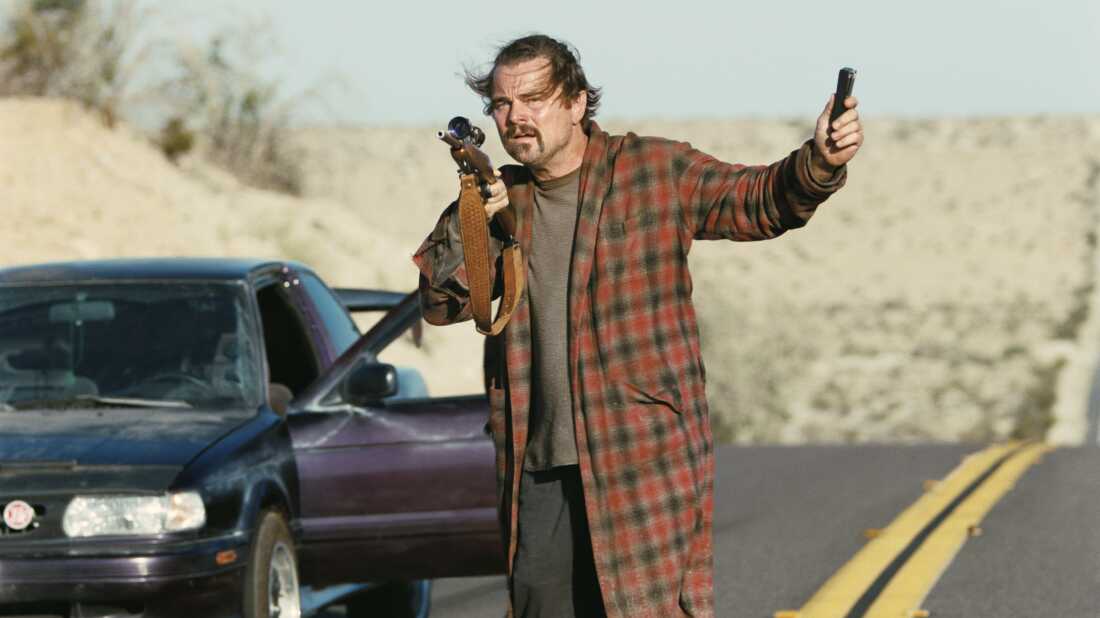















On August 8, director Zach Cregger’s Weapons (2025) was released to U.S. theaters. Unlike most trailers that advertise based on genre and star-power, promotional content for Weapons consisted mostly of its central hook: all but one of the kids in a particular teacher’s elementary school classroom running out of their homes in the middle of the night. Naturally, this premise turned the heads of several horror fans. The trailer naturally depicted it as a horror, but also emphasized its mystery elements. This curiosity was a major factor in drawing general audiences to see the movie. Upon its release, audiences were surprised to see that Weapons featured several comedic elements throughout its runtime.
I had seen a number of reviews emphasizing that Weapons featured more comedy than the trailer let on, so I wasn’t hit with the shock or confusion regarding the inclusion of some of the situational irony or even the slapstick comedy during certain scenes. Still, I found it interesting how much comedy fit into a horror film like Weapons, especially since it would not generally be considered a comedy movie as a whole. The comedic nature of the film seemingly originates mostly from the background of writer and director Zach Cregger.
From 2000 to 2011, Cregger was a part of a sketch comedy troupe called The Whitest Kids U’Know, alongside comedian Trevor Moore. Starting in 2006, the group produced a television series that ran for five seasons. Moore and Cregger naturally had a very close relationship up until Moore’s accidental death on August 7, 2021, a date that non-coincidentally aligned with the release date of Weapons. With this in mind, as well as acknowledging some nods to Trevor Moore’s material within the film, it can be noted that Weapons was written in a time of grief.
Cregger himself admits that the writing process of Weapons was a method of processing his own emotions. A major aspect of the film, involving the only remaining child having to take care of his zombified parents, is noted to have come from Cregger’s childhood trauma, specifically his background involving parents with alcoholism. Of course, the grief Cregger had to process following his close friend’s death also played a role in the writing process of the film. This provides a reasonable explanation for the amount of comedy in Weapons, that being a grieving process which led Cregger to remember the comedy that Moore brought during his life, rather than just the horror of the void he left. In a way, it seems poetic: Cregger having a difficult time processing his emotions, deciding to write a screenplay to better process them, and finding gratitude for the comedy that Moore provided to him throughout the time he was alive. Not to mention, the film’s comedy works very well. No joke feels out of place, and Cregger leaves enough room for the true horror elements to breathe and settle in audiences’ minds.
A few weeks prior to the release of Weapons, a group of friends and I watched Cregger’s directorial debut Barbarian (2022) in preparation for his at-the-time upcoming film. I have often strayed away from the horror genre in the past, mostly since streaming services have placed heavy focus on shock value, jumpscares, and the occasional poorly-disguised fetish. A trend I much prefer in horror has been a deep connection between the characters and the horror, almost like a layer of irony. Some examples of this would be Ari Aster’s Hereditary (2018) and Midsommar (2019), and much earlier, James Wan’s Saw (2004). Barbarian particularly surprised me as it managed to avoid the clichés while not necessarily having a reason behind the horror or its connection to the characters. Instead, the characters felt realistic and the plot felt unpredictable.
Weapons followed this trend. Not only did it depict specific and unconventional horror themes in a compelling way, but it allowed audiences to resonate with the realism of the characters. I walked away particularly pleased with the balance of comedy and horror, as many horror movies that make an attempt at comedy often rebrand themselves as comedy movies or simply parodies of horror.
An element to the film that should and can not go ignored is the analogy of the missing kids, corresponding of course to the rise in school shootings in the United States in recent years. Many have expressed confusion at a dream sequence in Weapons where Josh Brolin’s character sees a floating AR-15 above a house, with the number 217 written across it. I could be missing certain alternative explanations, but to me, this was an attempt at a more obvious connection to this idea of the consequences of school shootings, with the number 217 corresponding to 2:17 AM, the time at which the kids ran out of their homes in the film. The hook of the film in general, that being the disappearance of an entire classroom of children and its effects on the community, is particularly interesting due to a lack of media coverage or widespread knowledge of this supernatural phenomenon in the film. It seems intentional that Weapons focuses on parents, teachers, and law enforcement in the community rather than media attention, implying that the United States’ desensitization to school shootings has resulted in a lack of media coverage of such horrific events.
Weapons is a complex film in many ways. It mixes genres, expresses and even combines a number of different themes, pays tribute to the late Trevor Moore, and provides general audiences with a new type of horror that they may not have been familiar with. I find Weapons extremely impressive for not only effectively doing so, but for managing to be so entertaining upon a casual viewing.